
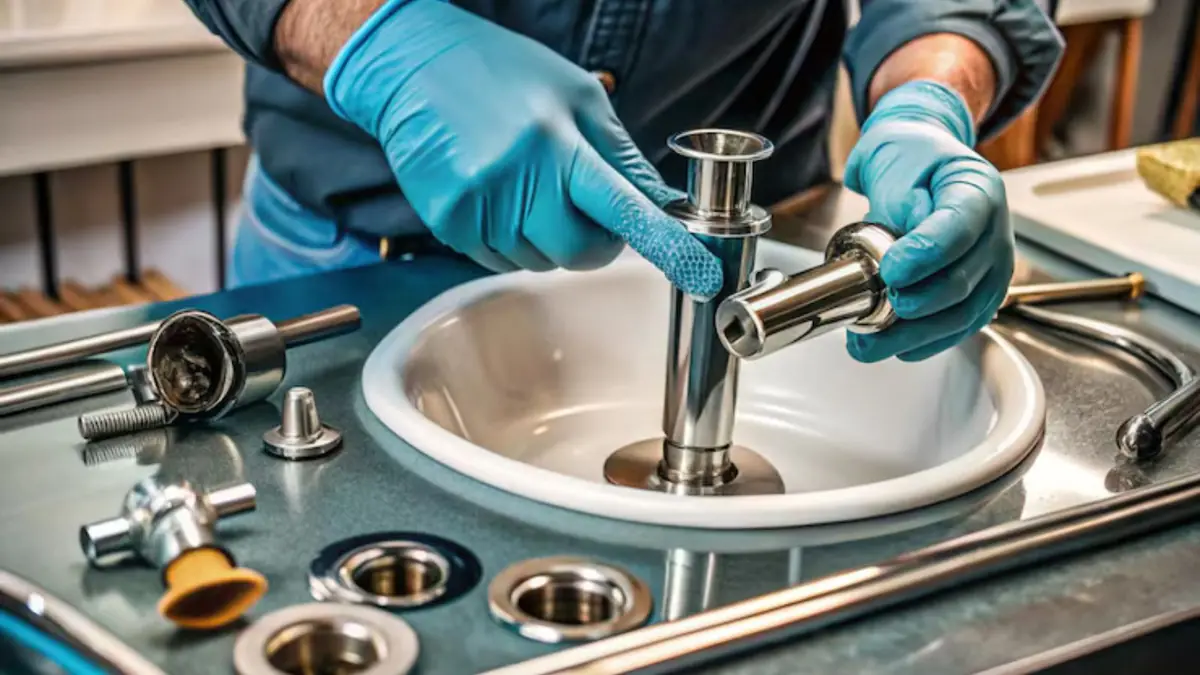
Match the leak to the part
Dry the faucet and cabinet with a towel first, then watch for where the first bead of water forms.
Drips from the spout
The cartridge, ball or valve seat inside the faucet no longer seals when the handle is off. This is the classic dripping faucet.
Water around the handle
An O-ring, packing nut or cartridge retaining piece has worn. Water rides up the stem and shows at the handle base.
Pool at the base of the spout
On many faucets the spout swivels on O-rings. When they harden, water seeps out at the swivel joint.
Wet cabinet under the sink
A loose supply connection, a cracked supply line, or a leaking mounting seal may be the cause. Check before you blame the faucet body.
Weak flow or sputtering
A clogged aerator or a blocked cartridge port reduces flow. Mineral flakes in the screen are the usual sign.
Pull-down spray leaks or sticks
The hose, quick connector or weight can fail, and the sprayer head may drip when it should retract.
Why a faucet drip costs more than it looks
One drip per second adds up to roughly 260 gallons a month, according to the Indiana Office of Utility Consumer Counselor. A meter picks that up, and the cost builds quietly over a year.
EPA WaterSense names dripping faucets among common household leaks and puts the saving from fixing easy ones near 10 percent of a water bill. A drip is a small repair that can pay for itself, and it is worth fixing before the seat wears further.
What to do before you take anything apart
These steps protect your cabinet and make sure the fix is the right one.
Shut off the supply
Turn the two angle stop valves under the sink clockwise until snug. Open the faucet to release the pressure and confirm the water has stopped.
Plug the drain
Put a rag or stopper in the sink drain so a small screw or O-ring cannot fall in.
Photograph the parts
Take photos as you disassemble. A phone picture of the order of parts is worth more than memory.
Note the brand and style
Look for a name on the handle or under the sink, and note whether it is single-lever, two-handle or pull-down. Replacement cartridges are brand specific.
Bring the old part to the store
Match the cartridge, O-rings and seats exactly. A near fit leaks again.
Want a licensed plumber to look at it?
Call the 24/7 line and describe what you are seeing.
The usual fixes, by faucet type
Single-handle faucets almost always use a cartridge. Replace it and the O-rings, clean the seat, and reassemble. Two-handle compression faucets use rubber washers and seats that wear. New washers or a seat dressing usually fix the drip.
Ceramic disc faucets rarely drip unless debris or hard water scale has scratched the disc. Cleaning can fix it, and a new cartridge is the next step. Pull-down faucets often leak from the hose connection or the sprayer, and those parts are sold separately.
Whatever the type, replace seals in pairs and lubricate O-rings with plumber's silicone grease. Do not use petroleum jelly on rubber parts. Tighten nuts snug, not hard, because over-tightening cracks plastic and strips brass.
Repair or replace the faucet
A faucet is worth repairing until the cost and the odds of success tip the other way.
Repair when
- The faucet body is sound and not corroded
- Parts for your model are available
- The leak is a single worn cartridge or seal
- The finish and look still suit your kitchen
Replace when
- The body is pitted or cracked
- Parts are discontinued or hard to find
- It has been repaired several times already
- You want a pull-down sprayer or better flow
Hard water, aerators and slow flow
Mineral deposits are the quiet cause of many faucet complaints. They clog aerators, score ceramic discs and stiffen cartridges. Unscrew the aerator at the spout tip, rinse out the screen, and soak it in vinegar if you see white or tan crust.
An aerator that clogs again within weeks hints at hard water. Look up the hardness figure in your water utility's yearly quality report, which your bill leads you to. A high number is a reason to ask about a water softener.
Call us or do it yourself
Call a plumber if the water will not shut off at the angle stops, the stop valve itself drips, or there is water under the sink that does not trace to the faucet. Also call if the floor of the cabinet is soft, which means the leak has been going for a while.
Cartridge and O-ring jobs are good DIY work with the water off. Anything that needs soldering, cutting pipe, or replacing a corroded shutoff valve is a plumbing job. Our faucet repair service handles these.
What this means in Zionsville
Winters here test every faucet. The National Weather Service normal for an Indianapolis January is an average low of 20.9 F, the closest long-term reading. A sink on an exterior wall is the first place a cold snap shows up, so a worn cartridge that will not shut off cleanly is worth fixing before December.
The Indiana OUCC advises that at zero degrees or below you open the cabinet doors under sinks and let a pencil-width stream run from a faucet, ideally one on an exterior wall. A faucet that already drips gives no warning when it matters, so test that yours turns fully off and on.
EPA's meter test helps tell a faucet leak from a hidden one. Shut off every tap, note the meter, wait two hours without using water, then read it again. If the dial moved and the faucet is dry, the problem is elsewhere, and we can help with that through leak detection or in nearby Whitestown and the rest of our service area.
Frequently asked questions
A scratched valve seat, a missing O-ring or the wrong cartridge is the usual cause. Shut off the angle stops, pull the cartridge again and check the seat for nicks.
On a swivel spout, the O-rings at the base have probably hardened. Replace them and lubricate with plumber's grease. If the leak is under the faucet deck, the mounting seal may be the cause.
The OUCC suggests a pencil-width stream from a faucet, ideally on an exterior wall, when temperatures reach zero or below, plus open cabinet doors under the sink. That is for deep cold only. A steady drip all winter is a worn faucet, so repair it.
If the body is sound and parts are available, yes. If the finish is worn through, the body is pitted or parts are discontinued, a new faucet is often the better call.
A clogged aerator is the first suspect. Unscrew it, clean the screen and flush the line. If only one faucet is weak, the cartridge or a partly closed angle stop may be the cause.
Sources
Figures and guidelines on this page are taken from these public sources. Local rules and utility details can change, so check the source before you rely on a number.
- Indianapolis January average low 20.9 F (Local government)
- OUCC: at zero degrees or below run a pencil-width stream, open cabinet doors under sinks (Agency)
- OUCC: one drip per second wastes roughly 260 gallons a month (Agency)
- EPA WaterSense: dripping faucets as common leaks, about 10 percent bill savings, meter test over two hours (Federal agency)