
Start with the room, not the model
The place where the heater sits settles more than the brand does. A gas unit needs a flue path to the outside and enough air for combustion. An electric unit needs a dedicated 240-volt circuit with the right breaker and wire gauge. A heat pump model needs open space around it, and a tankless unit needs a gas line sized for its burner.
A water heater in an attic or on a second floor also needs a drain pan piped to a safe spot, since a leak there lands on a ceiling. We walk the path from the shutoff valve to the vent before choosing anything.
Gas, electric, tankless and heat pump at a glance
Each type asks the house for something different.
| Type | What the house must provide | DOE lifespan |
|---|---|---|
| Gas storage tank | Gas line, flue to outside, combustion air | 10 to 15 years |
| Electric storage tank | 240-volt circuit, space for the tank | 10 to 15 years |
| Tankless (gas or electric) | Larger gas line or heavy electrical service, venting | About 20 years |
| Heat pump (hybrid) | 240-volt circuit, open air space, condensate drain | 10 to 15 years |
Lifespans are the US Department of Energy figures. For a deeper look at demand-type units, see our tankless water heater page.
Sizing the tank to the household
A 40-gallon tank is common in smaller homes, and a 50-gallon is the usual step up for families. The first-hour rating on the yellow EnergyGuide label tells you how much hot water the unit delivers in a busy hour, which is a better guide than the tank volume.
Count your peak hour, not your daily total. If three showers, a dishwasher and a washing machine run back to back in the morning, that hour sets the size. A tank sized too small runs out, and one sized too large keeps more water hot than you use.
Planning water heater installation work?
Call for a clear price before work starts, and ask about same-day appointments when available.
Venting, gas lines and electrical, the details that decide the job
These are the points we check and set before a unit is fastened down.
- Atmospheric vent A traditional gas heater rises on a draft hood and a metal flue. The flue must slope upward and stay clear of combustibles.
- Power vent or direct vent A fan pushes exhaust through plastic pipe out a side wall. It needs an outlet nearby, and the pipe run is limited by the manufacturer.
- Gas supply A shutoff valve, a drip leg and a flexible connector sit on the line, and every joint gets a soap-solution leak test.
- Electrical An electric tank needs its own breaker and a disconnect within reach, wired to the manufacturer's listed size.
- Combustion air A heater in a tight closet can starve for air. Backdrafting pulls exhaust into the room, which is why vent draft is checked after startup.
Expansion tank, relief valve and drain line
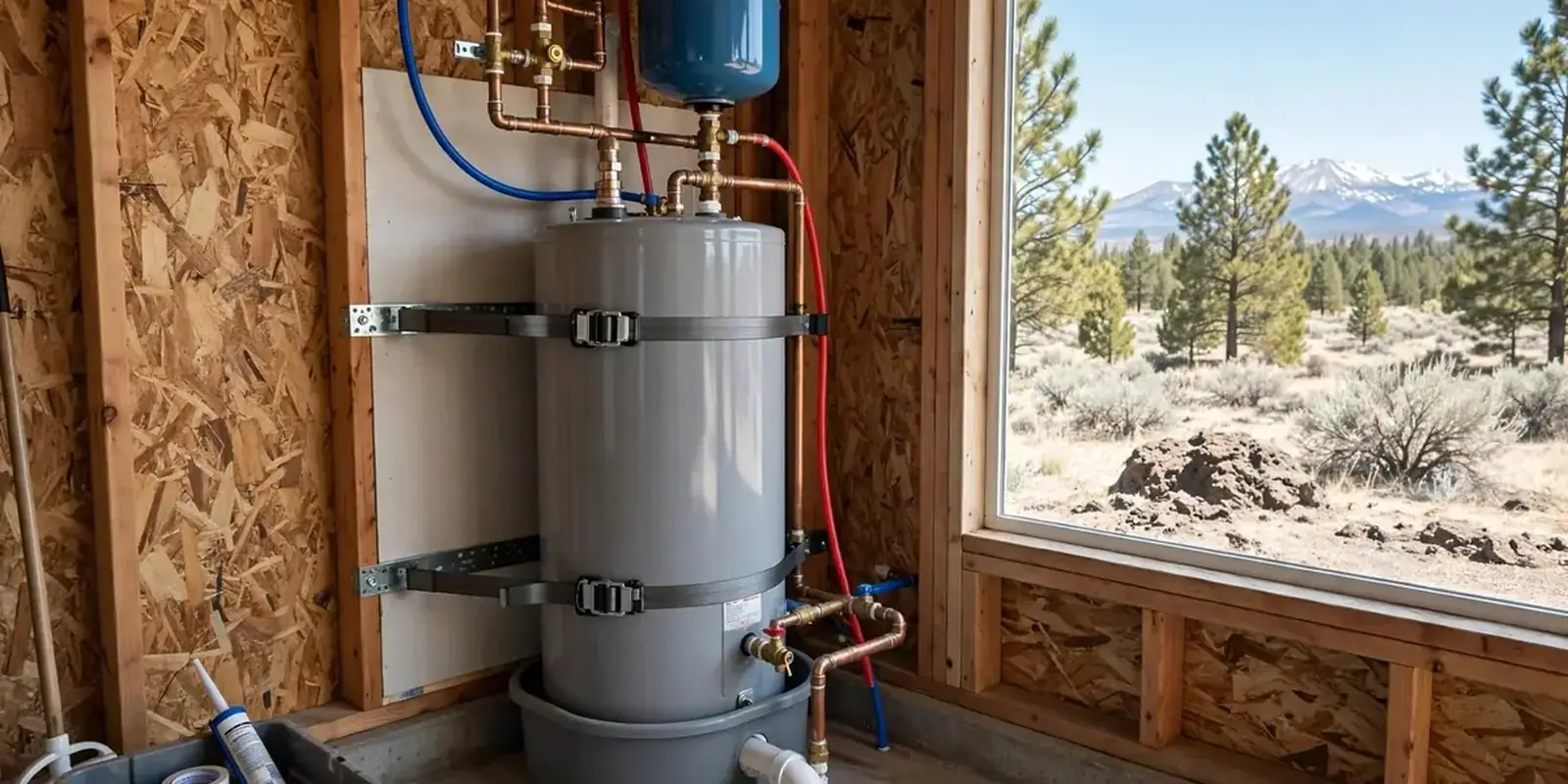
Water expands when it is heated. On a closed system (one with a check valve or pressure reducing valve at the meter), that extra volume has nowhere to go, and pressure climbs on every heating cycle. A small thermal expansion tank on the cold line takes up the swing. Its air charge is set to match your house pressure before it goes in.
The temperature and pressure relief valve is the last safety. It opens at 150 psi or 210 degrees F, and its discharge pipe must run downward to a floor drain or outside, with no valve, cap or threaded end. Never plug it. A drain valve at the base lets the tank be flushed later.
What is and is not included in an installation
Spelling out the scope before the visit prevents surprises on the day.
Normally part of the job
- Removing and hauling away the old tank
- New flex water connectors, a new relief valve and its discharge pipe
- Gas connection with a leak test, or electrical hookup to an existing circuit
- Venting adjustments for a like-for-like unit
- Filling the tank, bleeding air and checking the temperature setting
Priced separately, if needed
- A new 240-volt circuit or panel work by an electrician
- A larger gas line or a new flue path
- An expansion tank where none exists
- A condensate drain or a pan with a drain line
- Drywall, framing or finish repair around the work area
Permits and inspection
Whether an installation needs a permit depends on the work. Swapping a unit in place, converting fuel and adding a gas line can each be treated differently. We do not guess. The Zionsville Planning & Building Department at 1100 W Oak Street reviews building permits for the Town, and it is open Monday to Friday, 8 a.m. to 4 p.m.
Call before the install date and describe the plan. If the office asks for a permit, it needs to be in hand before work starts, and it may involve an inspection afterward.
Planning around hard water and winter
Mineral-heavy water builds scale on elements and burner surfaces, and it shortens the life of a tank or clogs a tankless heat exchanger. Test your tap with a kit, and ask your water utility for its annual water quality report. If your water is hard, a softener upstream of the heater may be worth the cost, and our water softener page covers that.
In Indianapolis the January average low is 20.9 F. Cold incoming water makes the unit work harder. A heater in an attic, an unheated garage or against an exterior wall needs insulated lines, because those spaces put pipes at risk of freezing.
What affects the price of a water heater installation
Two houses with the same tank can have very different totals, which is why we price after hearing the plan.
Unit choice
A basic electric tank, a power-vent gas unit, a tankless heater and a heat pump model all come at different equipment costs.
Fuel and venting changes
Moving from electric to gas, or from an open flue to a sealed vent, adds pipe, fittings and labor.
Electrical and gas capacity
An older panel or a small gas line may need upgrades that fall outside plumbing.
Location in the house
Attic installs, tight closets and finished rooms add labor and may call for a drain pan.
Permit and inspection
Where the Town requires a permit, its fee and the scheduling are part of the total.
Insurance generally does not pay for a planned upgrade. It may pay for sudden water damage if a new connection fails, so keep your invoice and ask your agent what your policy requires.
Describe your house and the unit you are weighing, and you get a clear price before any work starts.
Call (317) 740-1302Installing in Zionsville homes
Zionsville is a Boone County town with an 84.2 percent owner-occupied rate, per the Census Bureau, so most installs are done by people who will live with the result for years. That favors a properly vented, correctly sized unit over the cheapest one on the shelf.
We are licensed and insured, and you can confirm any plumber through the Indiana Professional Licensing Agency or the state's online license verification. We also serve neighboring Whitestown and nearby towns. If the old unit has failed, see our water heater replacement page.
Frequently asked questions
A like-for-like tank swap is usually a half-day job. A fuel change, a new vent or a tankless install takes longer. Once we see the room, we can give you the expected length.
Ask the Zionsville Planning & Building Department, which reviews permits for the Town. Rules depend on the scope of work, so describe the plan before booking.
Size by the first-hour rating on the EnergyGuide label against your busiest hour. For many households that means 40 to 50 gallons, though large families need more.
DOE lists tankless units at about 20 years, versus 10 to 15 for tanks. The house must support the higher gas or electrical demand, and the water should be tested for hardness first.
Heated water expands, and a closed system cannot absorb the volume. The tank protects fixtures and the relief valve from repeated pressure spikes.
No. The discharge pipe runs downward to a drain or outside with nothing blocking it. A capped valve cannot do its job.
It depends on the unit, the venting and the room. We price the job after hearing the plan, and you get a clear price before work starts.
Sources
Figures and guidelines on this page are taken from these public sources. Local rules and utility details can change, so check the source before you rely on a number.
- DOE lifespans (Federal agency)
- Planning & Building Department address, hours, permit review (Local government)
- 84.2% owner-occupied (Federal agency)
- January average low 20.9 F (Federal agency)
- License verification (State of Indiana)