When a sewer line failure is an emergency
Treat it as an emergency when wastewater is coming up through a floor drain, a tub or a toilet in more than one place. That pattern points past a single clogged fixture to the main line. Every flush and every load of laundry pushes more water into a pipe that cannot carry it away.
Raw sewage in the house is also a health problem. Keep children and pets out of the area, do not touch it bare-handed, and do not run a shop vacuum through it. Call us at any hour, including nights, weekends and holidays, and we will tell you what to shut off while a plumber is on the way.
What to do while you wait
Five quick moves keep a bad backup from getting worse.
Stop all water use
No flushing, showers, dishwasher or washing machine. Each gallon you send down has nowhere to go but back into the house.
Find the cleanout
A capped pipe, usually 4 inches wide, sits in the basement, crawl space or yard near the house. Do not open it unless we ask, since pressure behind the cap can spill sewage.
Move belongings off the floor
Lift rugs, boxes and electronics away from the affected drains. Leave the electrical panel alone if water is near it.
Photograph everything
Take pictures of the water line, damaged items and the drains before cleanup. Your insurance adjuster will want them.
Open a window and keep people out
Sewer gas smells bad and the water carries bacteria. Ventilate if you can and keep the area closed off.
Why sewer lines fail in Zionsville homes
The Town of Zionsville provides sewer service, but the pipe from your house to the main is yours to maintain unless the Town tells you otherwise. Census figures put Zionsville at 11,822 households with 84.2 percent owner-occupied and a median owner-occupied home value of $587,800. With that much invested in a house, a lateral that fails is worth repairing correctly the first time.
Most failures come from three things. Roots enter through joints looking for moisture. Older clay and cast iron pipe cracks or flakes with age. Soil settles and leaves a low spot, which the plumbing trade calls a belly, where solids sit and clog the line over and over.
Sewer Line Repair problem right now?
Call the 24/7 line. Tell us what you see, and we will tell you what to do first and what a visit involves.
Signs your sewer line needs repair, not just cleaning
A clog that a drain machine clears for good is a clog. These patterns suggest the pipe itself is damaged.
It clogs again within weeks
A line cleared by cable that backs up again a few weeks later often has a root mass or a sag holding debris.
Several drains gurgle together
Air pushed out of a blocked main bubbles up through the nearest open drain, often a floor drain or tub.
Sewage smell in the yard
A wet, foul patch or a stretch of unusually green grass over the line suggests wastewater leaking into the soil.
A sunken spot in the lawn
Soil washing into a broken pipe leaves a void, and the ground settles above it.
Slow drains everywhere
When the kitchen sink, tub and washer all drain slowly together, the shared line is the likely cause.
Cleaning keeps hitting a wall
A cable that stops at the same spot every time points to a collapse, an offset joint or a root ball.
How we find the break before we dig
We run a waterproof camera head on a push cable through the cleanout. The monitor shows cracks, offset joints, roots, scale and standing water, and we record the run. If the line is full of debris, we clear it first, since a camera cannot see through grease and paper.
A transmitter in the camera head lets a locator above ground read the depth and position of the fault. That tells us how much yard, driveway or slab sits over the problem before anyone picks up a shovel. If you only want the pipe examined, our sewer camera inspection service covers that on its own.
Repair, lining or replacement
The right fix depends on what the camera shows. Here is how the common options compare.
| Option | Best when | Trade-off |
|---|---|---|
| Spot repair | One cracked or offset section, with a clear path to it | Needs an excavation, and the rest of the old pipe stays in place |
| Trenchless lining | Cracks, small root entry or leaking joints in a pipe that is still round | Does not fix a sag or a collapse, and the pipe must be cleaned first |
| Pipe bursting | A badly failing line where a new pipe can replace the old path | Needs entry pits at each end and a clear run |
| Full replacement | Collapse, deep bellies or pipe that has crumbled | Most disruption to the yard, driveway or landscaping |
No option suits every pipe. We will show you the video and explain why we picked the one we did.
Sewer backup in the house
A sewer backup happens when wastewater cannot leave the house at the rate it enters. The cause is either a blockage the pipe is able to clear, or a pipe that is broken. A main clog from grease or paper can often be cleared with a cable or water jet, and our page on sewer line cleaning covers that route.
If the line backs up again soon after cleaning, or the camera finds a break, cleaning will not hold. Then repair is the real fix. We look at the line either way, because clearing a pipe without looking inside it can leave a crack or a root mass for the next backup.
Before cleanup starts, document the water level, the rooms affected and what was damaged. Standard homeowner policies often cover sudden and accidental water damage but may treat a backup from a sewer or drain as a separate endorsement. Check your policy and ask your agent.
Trenchless pipe lining, and where it stops working
Lining works like this. A felt tube soaked in epoxy resin is pulled into the cleaned pipe, inflated against the walls and left to harden into a pipe inside the old pipe. It seals cracks and joints and blocks roots from entering again, with only small access holes needed.
The liner follows the shape of the old pipe, so it cannot fix a sag or bridge a missing section. It also makes the inside diameter slightly smaller. We only recommend it when the camera shows a pipe that is still round and mostly intact, and we say so plainly when excavation is the better answer.
Cast iron sewer pipe
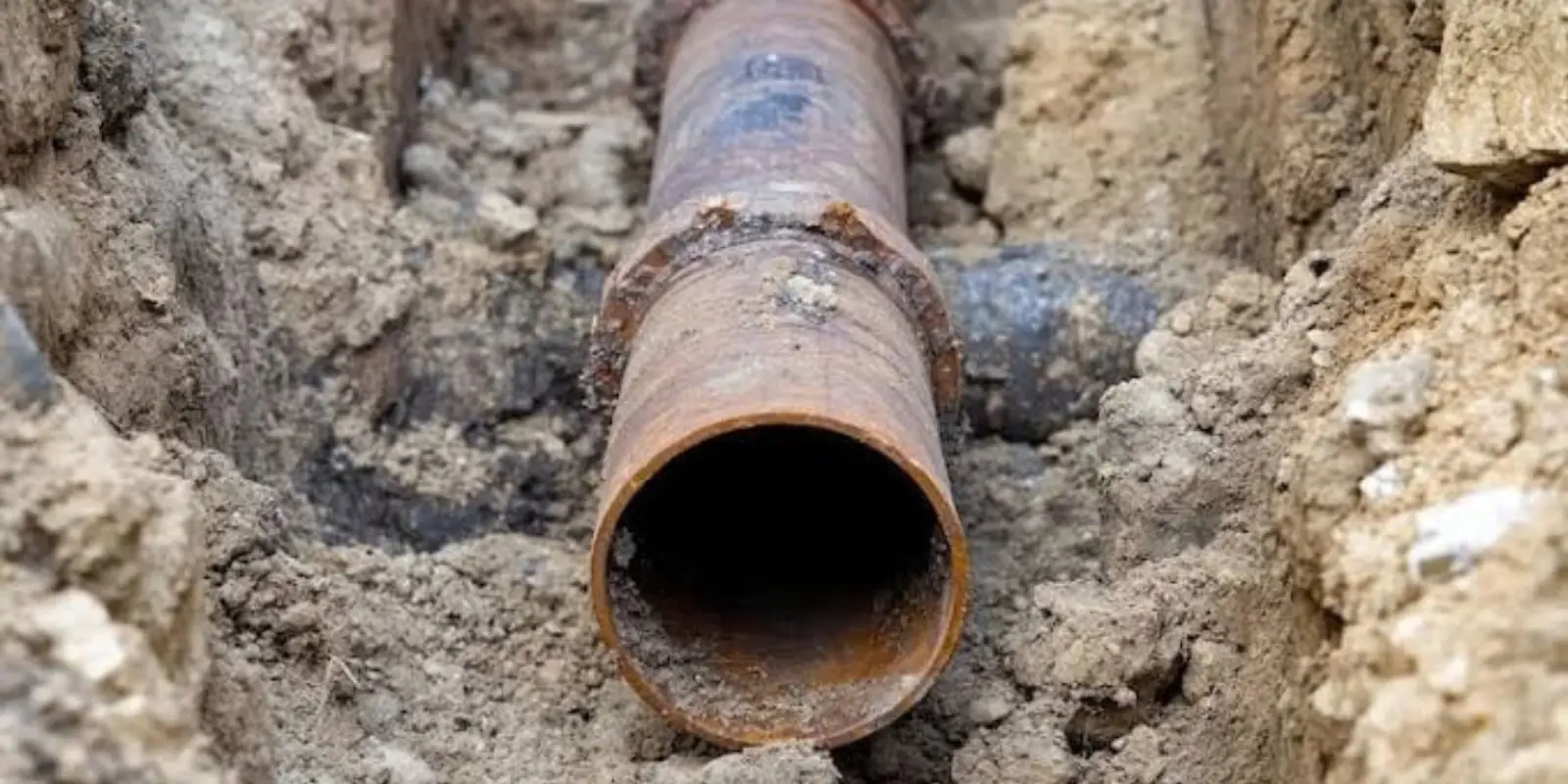
Many older houses have cast iron drain and sewer pipe inside the foundation or under the slab. Iron rusts from the inside, building rough scale that catches paper and grease. Eventually the wall thins, cracks or splits along the bottom.
Camera work shows how bad the scale is. Light buildup can be cleaned. A cracked or flaking section can be cut out and replaced with plastic pipe, and a long run in poor condition may call for a larger job. If a slab has to be opened, we explain that before the work is scheduled.
Septic systems and what we do not do
Most Zionsville homes connect to the Town's sewer, but a house on a private septic system works differently. Indiana local health departments issue septic permits, and the state lists residential rule 410 IAC 6-8.3 for onsite systems. For septic permits or design questions, contact the Boone County Health Department.
We do not pump septic tanks or design drain fields. We can camera the pipe between your house and the tank, find a root-damaged or broken line, and repair it. If the real problem is a full tank or a failing field, we will tell you to call a septic service instead of selling you a pipe repair.
Who owns which part of the sewer line
The sewer main under the street belongs to the utility. The lateral, the pipe running from your house to that main, is usually the property owner's. Exact boundaries vary by address and by Town ordinance, so before you commit to a repair, ask the Town of Zionsville where responsibility ends for your lot. Your wastewater billing account is the right place to start.
Digging in Indiana starts with a call. Indiana 811 must receive the excavation notice at least two full working days ahead and no more than ten calendar days ahead, and a ticket expires 20 days after submission. If your repair needs a trench, we plan the schedule around that window. For permits, ask the Zionsville Planning & Building Department, since rules differ by project.
What affects the price of sewer line repair
Sewer work ranges from a short spot repair to a full replacement, so no single figure applies. These are the factors that move a real quote.
Method
Lining, bursting and open trench cost different amounts and need different equipment and crew time.
Length and depth
A longer or deeper run takes more excavation, more pipe and more time before the yard can be restored.
What sits on top
Lawn is the simplest. A driveway, patio, tree or slab adds cutting, hauling and repair work.
Pipe condition
Heavy scale, roots or a collapse can mean cleaning and extra pipe before the main repair starts.
Access and time of day
A clear cleanout and open ground help. Night and weekend emergency work is staffed differently from a scheduled day visit.
A burst pipe that floods a room is the kind of sudden, accidental loss policies tend to cover. A cracked lateral that has leaked for months, or the cost of the pipe itself, usually is not covered. Backup from a sewer or drain is often handled by a separate endorsement, so read your policy and ask your agent before repairs begin.
Call us for a clear price for your house before work starts.
Call (317) 740-1302Licensed work and straight answers
We are licensed and insured, and you can verify any Indiana plumber through the Professional Licensing Agency or the state's online license verification. Ask for the name and look it up before work begins. Anyone acting as a plumbing contractor or journeyman without a license is breaking Indiana law.
We serve Zionsville and nearby towns, including the Whitestown service area, where newer sewer infrastructure means different problems from older Zionsville lots. When the cause turns out to be a failing joint or root entry on the supply side, a water line repair may be part of the same job. Same-day appointments are available when the schedule allows.
Frequently asked questions
Yes, the line is staffed 24/7, so a Saturday midnight backup gets the same call handling as a Tuesday morning one. Holidays included.
We do not quote an arrival time over the phone. We do tell you what to stop using and what to photograph while a plumber is on the way.
If one fixture clogs and a cable clears it for months, that is a clog. If multiple drains back up, the clog returns within weeks, or a cable stops at the same spot, the pipe may be damaged.
A camera run settles the question. It shows whether the pipe is open and clean or cracked, rooted or sagging.
It repairs a pipe from the inside, usually by pulling a resin-soaked liner through the cleaned pipe and curing it in place. Only small access holes are needed instead of a full trench.
It suits pipes that are cracked or leaking but still round. It does not fix a collapse or a deep sag.
Roots usually enter through an existing crack or loose joint, drawn by moisture and nutrients in the wastewater. They then grow into a mass that catches paper and grease.
Cutting the roots clears the flow for a while. Sealing or replacing the joint is what stops them coming back.
The Town of Zionsville runs the sewer system, and the main belongs to the utility. The lateral from your house to the main is typically the homeowner's, though exact boundaries depend on your address.
Ask the Town where responsibility ends for your lot. Your wastewater billing account is a good place to begin.
It depends on the scope of the work, so check with the Town's Planning & Building Department on Oak Street before you start. Indiana 811 also needs a notice before any digging.
Yes, in many cases. Full lateral replacement is a standard job, and pipe under a slab can be repaired by opening the floor or, where the pipe qualifies, by lining it from the inside. The camera shows which approach fits.
We explain the options and the disruption before work is scheduled.
Use the Indiana Professional Licensing Agency's plumbing page or the state's online license verification. Search by name and confirm the license is active before you sign anything.