
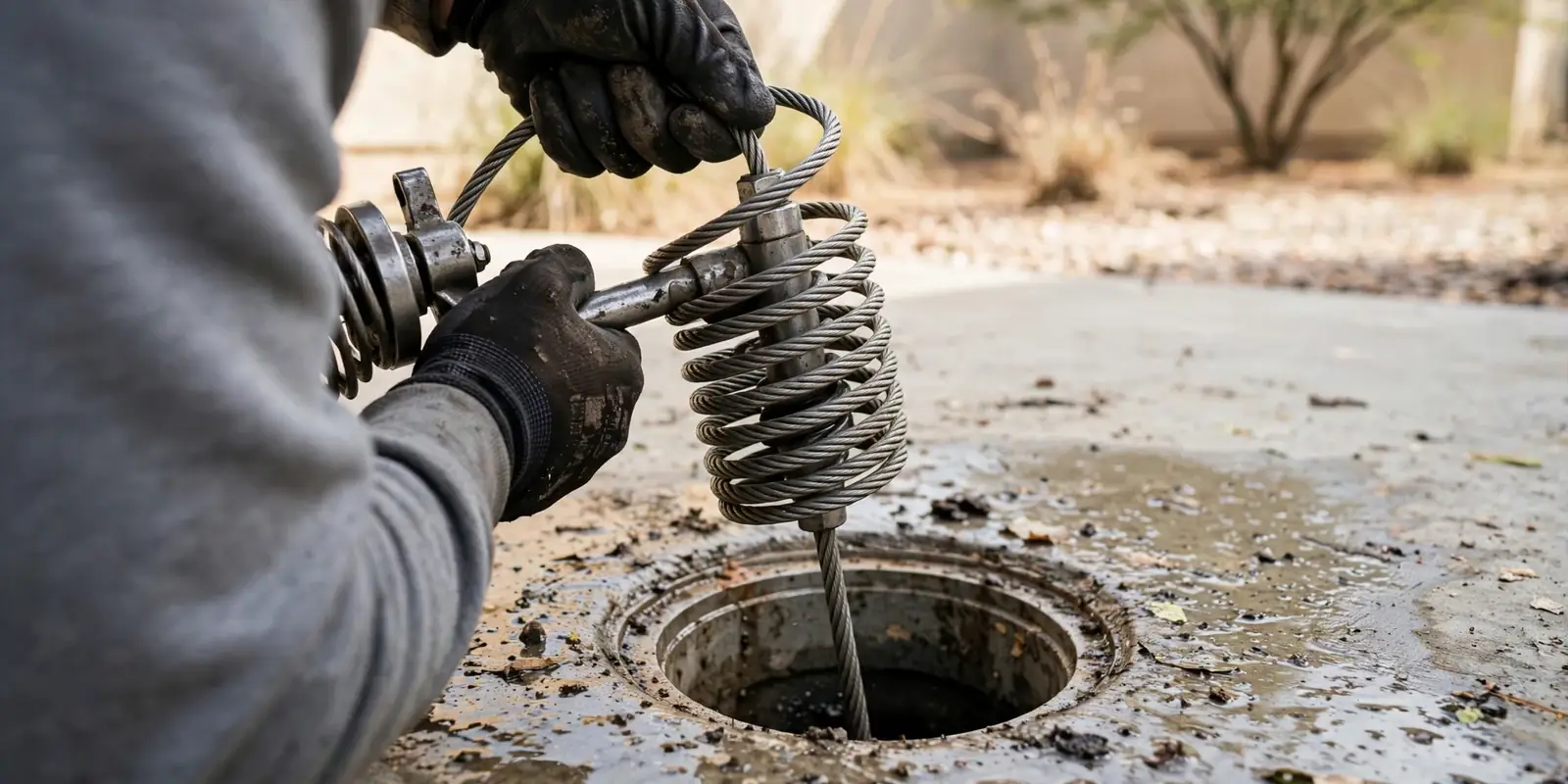
When a sewer backup is an emergency
Sewage coming up through a floor drain, a tub or a basement toilet is an emergency. Wastewater from a main line backup carries bacteria, and it can soak drywall, carpet and stored boxes within an hour. Call right away, at any hour.
Do not flush to see if it clears. Do not run the washer. If water reaches an outlet, a freezer or a furnace, stay out of that area. Shut off power at the breaker only if the panel is dry and you can reach it without standing in water. Otherwise ask us or your electric utility how to proceed.
What to do while you wait for sewer cleaning
Your goal is to keep the volume down and the damage small. These steps help in that order.
Stop flushing
A toilet sends 1.6 gallons or more down the line with each flush, and the line is already full. Use a bucket and a different bathroom if one is upstairs.
Hold the laundry
A washer discharges 15 to 30 gallons in a few minutes, enough to push a backup across a basement floor.
Check neighbors
If other homes on your street have the same problem, the blockage may be in the town main. Call the Town's wastewater office, since we do not work on municipal mains.
Open the cleanout cap carefully
If the cleanout is dry, a loosened cap can relieve pressure. If water is rising inside it, leave it closed and wait for us.
Document everything
Photograph the water line on walls and the items affected, and keep damaged goods until your adjuster has seen them.
Sewer backup, what is happening in the pipe
A sewer backup means the main line cannot pass water as fast as the house sends it. Water takes the nearest way out, which is the lowest drain. A partial clog gives slow drains and gurgling. A full clog gives backups. Both come from the same causes, which are grease, wipes, paper, roots, or a section of pipe that has shifted.
The first clue is which fixtures react. If only the basement tub and floor drain fill while the upstairs toilets flush, the blockage is downstream of the lowest branch, in the main. If one bathroom backs up alone, the problem is in that branch and drain cleaning may be all it needs.
We find out in one visit. We open the main cleanout, feed a cable, and see where it stops. The distance tells us roughly where the blockage sits, and whether it is inside the house or out toward the street.
Sewer Line Cleaning problem right now?
Call the 24/7 line. Tell us what you see, and we will tell you what to do first and what a visit involves.
Signs the main line is the problem
A main line seldom blocks without warning. Look for these patterns, especially if more than one appears.
Several drains slow at once
Sinks, tubs and the washer all drain slowly together, which points to the shared line.
Gurgling toilets
A toilet bubbles when the washer drains because air is being forced back through the water seals.
Water in the lowest drain
Water pools in a basement floor drain or shower while you use fixtures upstairs.
Sewer odor
A steady smell of sewage inside the house or near the cleanout suggests the line is holding waste.
Wet or lush spots in the yard
A soggy patch or unusually green grass over the line path can mean a break, which cleaning alone will not fix.
Repeat backups
A line that fills again a few weeks after clearing has roots, a belly or damage, and needs a camera.
Sewer lines in Zionsville
The Town of Zionsville provides sewer service and bills a flat monthly rate per residence. For you that means the street main belongs to the Town's Municipal Sewage Works, while the pipe from your house to that main is generally your concern. Ask the Town where your responsibility ends, because it affects who pays for a repair.
Census figures show 84.2 percent of Zionsville homes are owner-occupied, so most backups land on the homeowner. A cleanout near the foundation is the most useful feature a house can have for this. If your house lacks one, tell us, and we can discuss adding one while the line is open.
How we clear a main sewer line
We use a heavy drum or sectional cable machine with a 4 inch pipe cutter head, because a small sink cable will not reach or cut in a main. The head chews through paper, grease and thin roots and pulls debris back to the cleanout. For roots or grease that keep returning, we may suggest hydro jetting to wash the walls.
Main sewer cleaning ends when water runs freely. It does not end there for us. Before we pack up, we flush the line with water from a hose to confirm it drains, and we put a camera in if the cable showed anything strange.
Sewer drain cleaning for floor drains and laundry lines
A floor drain sits at the lowest point of a basement, so it is the first place a blocked main shows itself. A drain that overflows only after heavy rain is a different problem. That points to groundwater or a storm connection, and a sump pump or drainage issue may be involved.
Laundry standpipes and utility sink drains tie into the same main. We cable floor drains from the grate or the trap, and we check that the trap has water in it. A dry trap lets sewer gas into the room, and pouring a quart of water in often ends the smell.
Cleaning, camera or repair
Cleaning solves a blockage. It does not fix a damaged pipe. This table shows how we decide.
| What we find | What it means | Next step |
|---|---|---|
| Paper and soft waste | A one-time clog | Clear with cable, flush, done |
| Grease coating the wall | Buildup that returns | Cable, then consider jetting |
| Roots at a joint | Open joint feeding roots | Cut roots, camera, plan repair |
| Standing water in a dip | A belly in the pipe | Camera, then repair discussion |
| Cracked or collapsed pipe | Structural damage | Stop cleaning, discuss repair |
The camera is what tells these rows apart. A cable alone cannot see a belly or a crack.
Camera follow-up after the line is clear
A line that opens after one cable pass has told us little about why it blocked. A short camera run answers it. We look for roots at joints, a sag that holds water, offset joints and scale, and we show you the picture on the screen.
We recommend the camera after any backup that repeats, after roots, and before you buy a house. For the full run from cleanout to street, book a sewer camera inspection. If it shows a break, sewer line repair is the next conversation, and we explain options before any digging.
Storm drain cleaning
Storm drains are a separate system from the sewer. They carry only rain and runoff from downspouts, driveway drains, yard catch basins and footing drains. When one clogs, you see pooling at a driveway low spot or a window well that fills in rain. We cable and jet these lines the same way, and we pull out leaves, silt and mulch.
The Town of Zionsville is a regulated storm sewer entity under IDEM, and its stormwater ordinance prohibits discharges other than stormwater into the storm drain system. That affects us and you. We do not send wash water or sewage into a storm inlet, and you should not put cleaning water, paint or pool chemicals there. A clear-water sump discharge goes to the storm or yard side, never to the sanitary sewer.
What affects the price of sewer line cleaning
You get a clear price before work starts. Here is what shapes it.
Where the blockage is
A clog 15 feet from the cleanout is quicker than one 80 feet out under a yard.
Cleanout access
With a cleanout, the cable goes straight in. Without one, we may need to remove a toilet to reach the line.
Cause of the clog
Paper clears fast. Roots and compacted grease need a cutter and sometimes a jet.
Camera inspection
A camera run adds time and shows pipe damage, which is what decides whether cleaning is enough.
After-hours call
Night and weekend work is scheduled differently from a daytime visit, and we state any difference before starting.
Many homeowner policies exclude sewer or drain backup unless you add it as an endorsement, so check your policy and ask your agent before you need it. Keep photos and receipts from the day.
Tell us what is backing up and we will give you a price for your line before the cable goes in.
Call (317) 740-1302Licensed work, honest limits
The plumbers we send are licensed and insured. The Indiana Professional Licensing Agency licenses contractors and journeymen, and its free online license verification lets you check anyone before they enter your house. We do not clear municipal mains, pump septic tanks or give a verdict on pipe we have not seen on camera.
Before any excavation to repair a line, Indiana 811 must receive a notice at least two full working days ahead. If a repair needs a permit, the Zionsville Planning & Building Department can tell you, because rules vary by job. For lighter clogs, start with drain cleaning.
Frequently asked questions
Yes. The emergency line runs 24/7 and we book same-day appointments when available. Stop flushing and running water, move belongings off the floor and call with the drains that are affected.
We cannot promise an arrival time, but we will tell you what to do while you wait.
Run water at one fixture at a time. If the basement floor drain gurgles or rises when you flush an upstairs toilet, the main is blocked. If only one sink or tub is slow, the problem is on that branch.
Sewer drain cleaning usually describes a fixture drain that feeds the sewer, like a floor drain or laundry standpipe. Main sewer cleaning clears the 4 inch building drain and lateral. The machines differ, and so does the reach.
The Town operates its sewage works and the street main, while the pipe from your house to the main is generally the owner's. Details vary, so ask the Town where your responsibility ends before you plan a repair.
Usually yes. It shows roots, a sag, an offset joint or scale, and it records the picture for you. A camera cannot see through standing sewage, so we clear the line first.
Small jobs sometimes go fine. A rented cable can also jam, tear a thin pipe or miss the cause, and it leaves you with sewage on the floor. Our hydro jetting page explains when a pro tool is worth it.
Yes, we clear yard drains, downspout lines and catch basins. Clear water belongs on the storm side. The Town's stormwater ordinance prohibits discharges other than stormwater into its storm drain system, so ask the Town before you route any other water there.
Sources
Figures and guidelines on this page are taken from these public sources. Local rules and utility details can change, so check the source before you rely on a number.
- 84.2 percent owner-occupied (Federal agency)
- Town provides sewer service, flat monthly rate (town)
- MS4 / Stormwater ordinance (town)
- 811 notice timing (Agency)
- License verification (State of Indiana)