
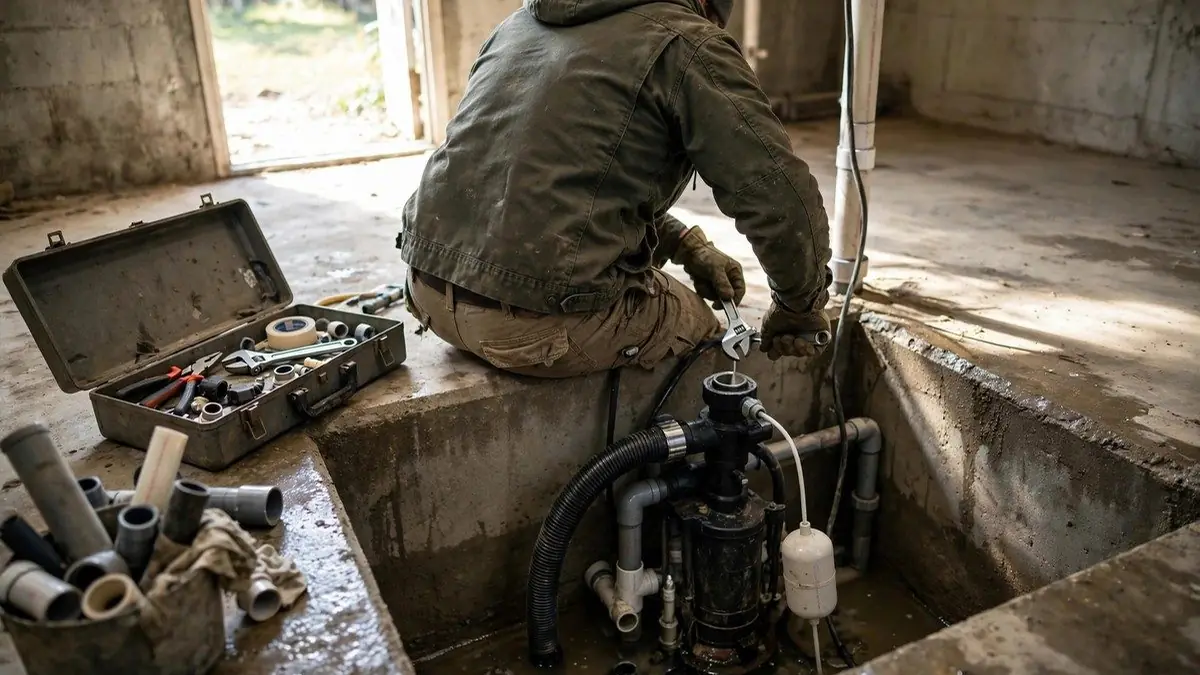
Does your crawl space need a pump, or something cheaper?
A sump pump moves liquid water. It does nothing for humid air. Standing water on the ground after a storm, a wet low corner, or insulation sagging off the joists all put a pump on the list. A space that only smells musty in July is more likely a humidity problem, and a vapor barrier or dehumidifier is the better first step.
Where the water enters matters as much as how much there is. A short downspout dumping roof runoff beside the foundation, a yard that slopes toward the house, or a clogged footing drain all send water to the same low spot. Fix the cheap causes first, then size the pump for whatever water is left.
Signs the water under your house needs a pump
Open the hatch with a flashlight a day or two after a heavy rain. These are the things worth looking for.
Water on the ground
Standing water 24 hours after the rain stops means it has nowhere to drain, and a pit gives it somewhere to go.
Wet or fallen insulation
Fiberglass batts soak up moisture, get heavy and sag away from the joists.
Rust on metal
Rusty nails, hangers and duct straps point to months of moisture, not one wet week.
White crust on block walls
That powder is mineral left behind when water seeps through masonry and dries.
Stained or spongy subfloor
Dark patches or a soft spot in the floor above the crawl space mean water has been reaching the wood.
A musty smell that spikes after storms
If the odor jumps after rain and fades when it is dry, groundwater is the likely source.
How a crawl space sump pump installation goes
The steps are close to a basement install, but everything happens on hands and knees. Access and headroom decide how long the work takes.
Find the low point and the water path
We look at where water collects, where it comes in, and whether the floor is dirt, gravel or a poured slab. The pit goes at the lowest point, or at the entry point if that is clearly different.
Dig the pit
A plastic basin roughly 18 inches across and about 2 feet deep sits in the hole on a bed of gravel. Perforated sides let groundwater seep in.
Set the pump and check valve
The submersible pump rests in the basin so silt does not clog the intake. A check valve on the discharge pipe stops pumped water from draining back when the pump shuts off.
Run the discharge line
Pipe, often 1.5 inch PVC, leaves through the rim joist or a foundation sleeve and ends where the water drains away from the house. The opening gets sealed against pests and drafts.
Wire and test
The pump plugs into a GFCI-protected outlet. We fill the pit with water and watch the float switch start the pump, the level drop and the pump stop.
Want a licensed plumber to look at it?
Call the 24/7 line and describe what you are seeing.
Pump, grading or drain work: which fits your crawl space?
Not every wet crawl space needs a pit. Use this to match what you see to the right fix.
| What you see | Likely fix | Who usually does it |
|---|---|---|
| Water pooled outside along one wall after rain | Longer downspouts, soil sloped away from the house | Homeowner or landscaper |
| Damp air, no standing water | Vapor barrier, dehumidifier, sealed vents | Homeowner or crawl space contractor |
| Standing water on the floor after storms | Sump pit, pump and discharge line | Licensed plumber |
| Water keeps returning to a pit you already have | Check pump size, float, check valve and discharge | Licensed plumber |
| Water enters through a cracked wall or footing | Drainage or sealing work, usually with a pump | Plumber or waterproofing contractor |
If water is coming through the wall itself, a pump only manages the symptom. Our basement waterproofing page explains the drainage work that sits alongside a pump.
Electrical risk and tight spaces
Water and electricity share this job. A crawl space pump should plug into a GFCI outlet, and you should never touch a cord or outlet while standing in water. If you see water around an outlet or a panel, stay out and shut off power at the breaker only if you can reach it dry.
Crawl spaces are confined. Clearance is low, there is often one way out, and the air can carry mold spores and insulation fibers. Wear a respirator and gloves, and tell someone before you crawl in.
Backup power and what happens when the pump quits
Pumps fail at bad moments. A storm that fills the pit often knocks out power too, and a float switch can also snag on the basin wall. A battery backup pump or a water-level alarm adds a second layer.
Test the pump every spring by pouring a bucket of water into the pit. It should start, empty the water and shut off without chattering.
Call a plumber or do it yourself
Some of this is a good weekend project. Some of it is not.
- Reasonable DIY Extend downspouts, regrade soil, replace a torn vapor barrier, and run the bucket test on an existing pump.
- Call a licensed plumber Cutting the pit, choosing the pump, routing and sealing the discharge line, and tying into existing drain piping.
- Call an electrician A new outlet or circuit near the pit. We set the pump, and a licensed electrician handles new wiring.
- Check the license Indiana's Professional Licensing Agency lets you look up any plumbing contractor or journeyman before you hire.
How to read a sump pump quote
Ask exactly what is included. A complete quote names the basin, the pump and its horsepower, the check valve, the discharge pipe and where it ends, the lid, the outlet and whether the dirt from the pit is hauled away.
Ask whether a backup pump or alarm is priced separately, and what the written warranty covers. Compare quotes line by line, not by the bottom number. Our leak detection work is the next call if the water turns out to come from a supply line instead of the ground.
What this means in Zionsville
National Weather Service Indianapolis lists 43.63 inches of precipitation in a normal year for 1991 to 2020. Indianapolis is the nearest long-term station, not Zionsville itself, but it shows why a crawl space that stays dry in August can flood in April. Judge the problem after a wet spell, not a dry week.
Zionsville's storm sewer rules matter for the pipe outside. The Town's ordinance bans most non-stormwater discharges but carves out crawl space pump water and footing drain flows. That carve-out is not a complete sump rule, so confirm with the Town before you pick the outlet point, and keep the pump off the sanitary line.
A discharge line that needs a trench across the lawn triggers a call to Indiana 811, which wants notice two full working days ahead and no earlier than ten calendar days before the dig. Permit questions go to the Planning & Building office on Oak Street.
Serving nearby towns
We work across Boone County, including Whitestown homes just up the road. You can see the rest of our service areas if your address is outside Zionsville.
Frequently asked questions
Yes. The basin sits in a hole dug into the dirt on a gravel bed, and the vapor barrier is cut and sealed around the lid. A dirt floor makes digging easier, but the pit walls need support so they do not collapse.
Deep enough that the pump and float sit below the water that collects, with the basin at the lowest spot in the space. A basin around 2 feet deep is common, but your crawl space height and water path decide the final depth.
Permit rules vary by project, so ask the Zionsville Planning & Building Department. Mention whether the job includes new wiring, a pipe through the foundation or trenching, since those are the parts most likely to draw questions.
Possibly, but confirm first. The Town's stormwater ordinance exempts crawl space pump water and footing drains from its ban on other discharges, yet it is not a full sump rule. Call the Town about your outlet, and never connect to the sanitary sewer.
No. Clear groundwater does not belong in the sanitary sewer, which adds load to the sewer system. It should go to the yard or the storm side, away from the foundation.
Pour a bucket of water into the pit. The float should rise, the pump should start, the water should drop and the pump should shut off cleanly. Do this each spring and before forecast storms.
Sources
Figures and guidelines on this page are taken from these public sources. Local rules and utility details can change, so check the source before you rely on a number.
- Indianapolis 1991-2020 normal annual precipitation 43.63 inches (Federal agency)
- Town of Zionsville Stormwater Management Ordinance exemptions for crawl space pump water and footing drains (FACTS.md) (Local government)
- Indiana 811 notice timing: two full working days before, no more than ten calendar days before (Agency)
- State online license verification for Indiana plumbing licenses (Agency)