
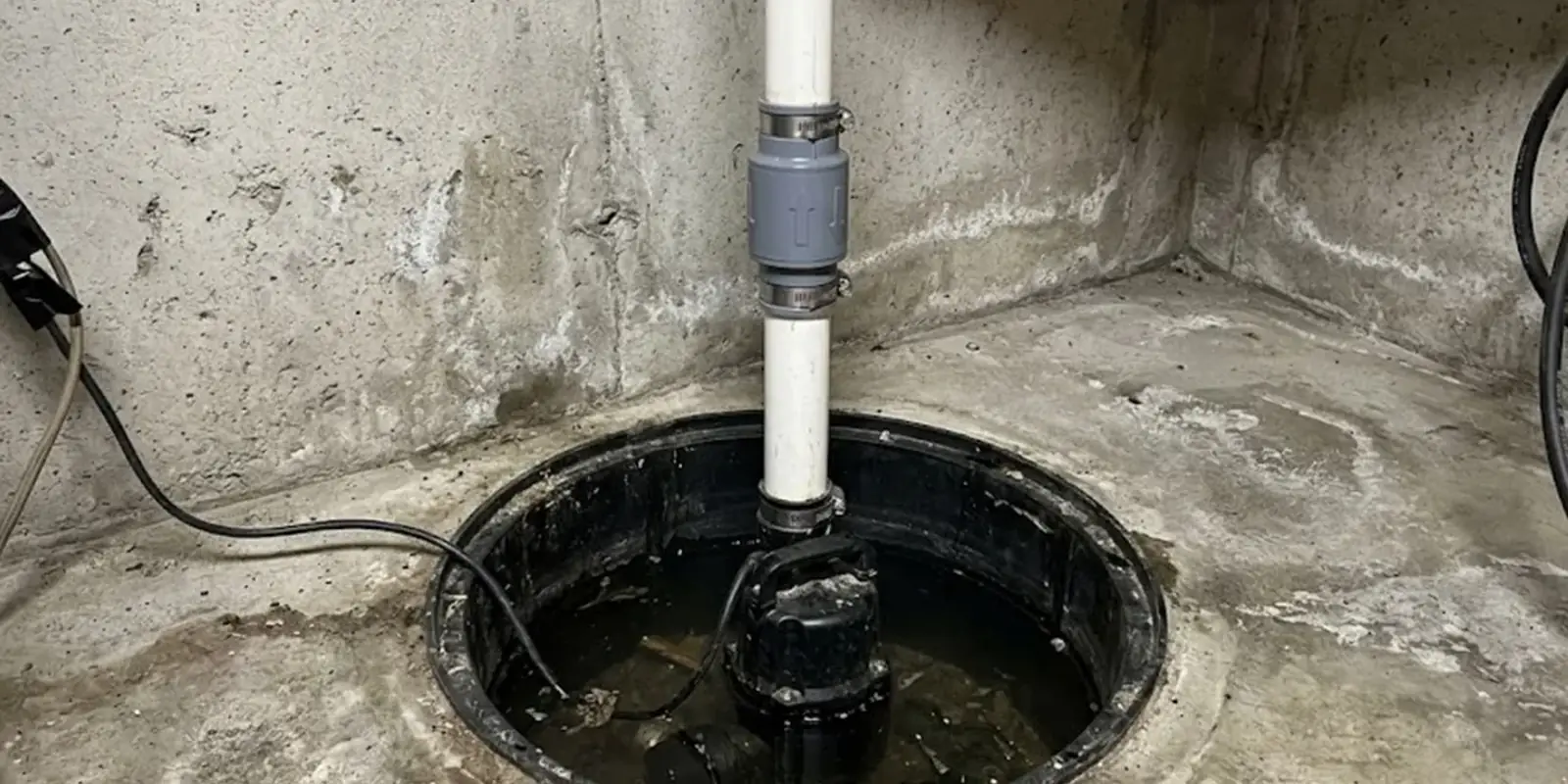
When a failed sump pump is an emergency
The worst time for a pump to quit is the time it is needed most, in a storm when the ground is soaked. If water is rising in the pit, the pump is silent or humming without moving water, and rain is still falling, treat it as urgent and call. We take emergency calls at night, on weekends and on holidays.
If the pump has died but the weather is dry, you have more time. We offer same-day appointments when available, and the right fix is usually a replacement that is sized for your pit and set up with a backup.
What to do while you wait
Your safety comes before your belongings. Water and electricity are a bad mix.
Stay out of standing water
If water covers outlets, extension cords or the floor around a panel, do not walk in it. Shut off power at the breaker only if the panel is dry and you can reach it safely.
Check the simple things
Is the pump plugged in, and is the outlet's GFCI button tripped? Reset it once. If it trips again, leave it off.
Look at the float
A float stuck against the pit wall or a pipe keeps the pump from switching on. Gently lift it by hand, if the water is not touching live power.
Slow the water
Bail the pit with a bucket or use a wet-vac made for water to keep it from overflowing. Move boxes, rugs and appliances up onto blocks.
Photograph everything
Take pictures of the pit, the pump and the water line on the wall before you clean. Your insurer will ask.
Why sump pumps fail in Zionsville homes
Indianapolis averages 43.63 inches of precipitation a year by NWS 1991 to 2020 normals, at the nearest long-term station to Zionsville. That is a lot of water for a pump to move across a season, and it concentrates in spring storms and thaws when the ground cannot absorb more.
The usual causes are old age, a float switch that sticks, debris or gravel in the pit, a clogged discharge line and a power outage during the same storm that raised the water. Pumps that run constantly burn out faster, so a wet spring cuts a pump's life short.
Sump Pump Service problem right now?
Call the 24/7 line. Tell us what you see, and we will tell you what to do first and what a visit involves.
Signs your sump pump needs attention
Pumps often give warnings before they fail. The earlier you act, the cheaper the fix.
It runs constantly
A pump that never shuts off may have a stuck float, a failed check valve or a pit too small for the inflow.
Loud grinding or rattling
Worn bearings and a damaged impeller make noise. A pump that sounds rough is near the end.
It hums but pumps little
A seized or clogged impeller keeps the motor turning without moving water.
Water in the pit does not drop
If the pit stays full after the pump runs, check the discharge line for a clog or frozen section.
Rust, sludge or an old unit
A pump showing rust on the housing or with a thick layer of silt in the pit is working hard. Age alone is a reason to plan a replacement.
Pump chatters on and off
Short cycling can come from a bad float, a missing check valve or a pit that is too small.
How we test and find the problem
We begin by testing the pump in place. We fill the pit with clean water until the float rises and the pump should start, then watch it drain the pit. We listen for grinding and look at how the water leaves.
Then we check the parts around it. That means the float and switch, the check valve on the discharge pipe, the pit liner and cover, the power supply and GFCI protection, and the discharge line outside. Most failures trace to a switch, a check valve or a pump that is simply worn out, and we tell you which.
Repair or replace a sump pump
A pump is not worth chasing forever. These pointers help you decide.
Repair is reasonable when
- The pump is fairly new and only the float or switch has failed
- The check valve is stuck or leaking
- The discharge line is clogged or crimped
- The pump motor and housing are in good shape
Replace when
- The motor is noisy, burnt or seized
- The housing is cracked or heavily rusted
- It has failed more than once
- It is too small for the water coming into the pit
Battery backup for power outages
A sump pump needs electricity, and storms that bring heavy rain often bring power cuts. A battery backup is a second pump or a controller that runs on a battery when the main pump loses power. It keeps the pit from overflowing during an outage.
Backups have limits. A battery only lasts a certain number of hours of running, depends on how fast water enters, and needs testing and eventual replacement. A water-powered backup uses your supply pressure and needs a suitable water source. We help you choose based on your pit, your flow and how likely you are to lose power.
Sump pump or sewage ejector pump
Callers often mix these two up. They look similar but do different jobs.
| Sump pump | Sewage ejector pump | |
|---|---|---|
| What it moves | Clear groundwater and stormwater from the pit | Wastewater from toilets, sinks and showers that sit below the sewer line |
| Where it sits | In a pit around the foundation drains | In a sealed basin with a gasketed cover and a vent |
| Where it discharges | Outside, away from the house | Into the home's sanitary sewer line |
| Failure sign | Water in the pit and on the floor | Sewage smell, slow drains, wastewater backing up |
| Typical service | Replace, add backup, clear the line | Replace, clean the basin, check the check valve |
The ejector pump is a plumbing waste system, not a storm system. If a basement bathroom backs up, treat it as a sewage problem and stay out of the wet area. For related drain work, see sewer line repair.
Where a sump pump discharges
Clear groundwater from a sump goes outside, away from the foundation, on the storm side. It never belongs in the sanitary sewer. Sending it there can overload the sewer system and cause backups for you and your neighbours.
The Town's stormwater ordinance lists water from crawl space pumps and footing drains among the flows it exempts. That is not a full sump discharge rule, so ask the Town where your pump may discharge and never tie a sump into the sanitary sewer. Contact the Zionsville Planning & Building Department at 1100 W Oak Street.
In winter, the discharge pipe can freeze at its outlet. Keep the end clear of snow and ice, and ask us about a freeze-resistant outlet. Pointing the pipe at a neighbour's yard or at the street can create other problems, so keep it on your property.
What affects the price of sump pump service
A pump swap and a new pit are very different jobs, so the price follows the work.
Pump type and horsepower
Submersible or pedestal, and the power needed to lift water from your pit to the outlet. A deeper pit or longer run needs more.
Pit condition
A cracked liner, silt or a missing cover may need repair at the same time.
Discharge line
A clogged, frozen or poorly routed line is common and changes the scope.
Backup system
Battery or water-powered backups are an added cost beyond the primary pump.
Electrical needs
A dedicated GFCI-protected outlet may be needed, which is separate electrical work.
Standard homeowner policies often exclude water that comes up through the floor or from groundwater, and sump pump overflow coverage is usually a separate endorsement. Check your policy and ask your agent, because it is cheaper to learn this before a storm.
Call us with your pit depth, pump age and symptoms, and we will give you a clear price before work starts.
Call (317) 740-1302Sump pump service in Zionsville and nearby towns
We are based at 11530 S US 421 and serve Zionsville, and our Whitestown service area page covers the neighbouring town. We install, replace, test and add backups to sump pumps. We do not dig up and redo whole foundation drain systems on this call, and for persistent wet basements see basement waterproofing.
Check any plumber you hire on the state's online license verification, and note that Indiana requires a license for plumbing contractors and journeymen. We are licensed and insured. If water in your basement is coming from a pipe rather than the ground, our leak detection page covers that.
Frequently asked questions
Yes. Our emergency line runs 24/7, including nights, weekends and holidays. Call and tell us whether the pit is full, whether the pump is making any sound and whether rain is still falling.
We cannot promise an arrival time, but we will tell you what to do while you wait.
Pour a few buckets of clean water into the pit until the float rises. The pump should start, empty the pit and shut off. Watch that water leaves through the discharge pipe outside.
Do this a few times a year, especially before spring. If it hums, struggles or does not start, call.
It varies with use. Pumps that run constantly in wet years wear out sooner than those that run occasionally.
If yours is old, noisy or has failed before, plan a replacement before the next heavy rain.
If your basement has flooded in a power cut, or storms in your area often take out power, a backup is worth considering. A battery lasts a limited time and needs testing.
We can look at your pit and tell you what size would match the water you get.
A sump pump moves clear groundwater out of a pit. A sewage ejector lifts wastewater from basement fixtures up to the sewer line.
Ejectors sit in a sealed, vented basin. If yours fails, wastewater may back up, which is a sewage problem.
Outside, away from the foundation, and never into the sanitary sewer. The Town's stormwater ordinance lists water from crawl space pumps and footing drains among the flows it exempts, but that is not a full sump discharge rule.
Ask the Town where your pump may discharge before you route a new line.
Permit rules vary, so ask the Zionsville Planning & Building Department. A like-for-like pump swap and new discharge piping may be treated differently.
We will tell you what the plan includes.
Often not by default. Many policies exclude groundwater and water backup unless you add an endorsement. Check your policy and ask your agent.
Keep photos and receipts after any loss.