
Find out where the water comes from first
Water gets into a basement in only a few ways. It seeps up through the joint where the floor meets the wall, it comes through cracks or tie holes in the wall, it runs in through window wells, or it backs up from a drain. Each path has a different fix, so guessing wastes money.
A simple test helps. Tape a one-foot square of plastic sheeting to the wall or floor, seal the edges, and check it after a day or two. Moisture under the plastic means water is coming through the concrete. Moisture on top of the plastic is condensation from humid air, and a dehumidifier is the answer, not waterproofing.
Why central Indiana basements get wet
The National Weather Service puts Indianapolis normal annual precipitation at 43.63 inches, based on 1991 to 2020 data. That is a lot of water landing around a foundation every year, and much of it falls in spring when the ground is already wet.
Soils matter too. USDA NRCS describes the Crosby soil, found on Indiana till plains, as clay-rich, with a perched seasonal water table about 0.5 to 2 feet down in winter and spring. That series is not confirmed in Boone County, so it is only a hint.
Clay-heavy ground drains slowly, which is why water can sit against a wall after a storm. A sump pit that fills after heavy rain is the usual sign.
Signs your basement needs attention
Not every damp patch is a leak, but these are worth checking.
Water at the floor-wall joint
A dark line or puddle along the edge of the slab after rain usually points to hydrostatic pressure from outside.
White chalky deposits
Efflorescence is mineral left behind when water moves through concrete or block and evaporates.
A sump pit that runs constantly
If the pump cycles every few minutes in dry weather, groundwater is high or a pipe nearby is leaking.
Horizontal cracks in block walls
These can mean soil pressure on the wall. A structural engineer should look at them before any sealing.
Musty smell and peeling paint
Paint that blisters off the wall is often pushed by moisture from behind.
Water backing up at a floor drain
That is a drain or sewer issue, not seepage, and it needs a different repair.
Planning basement waterproofing work?
Call for a clear price before work starts, and ask about same-day appointments when available.
Interior drain system or exterior excavation
These are the two real approaches, and neither is right for every house.
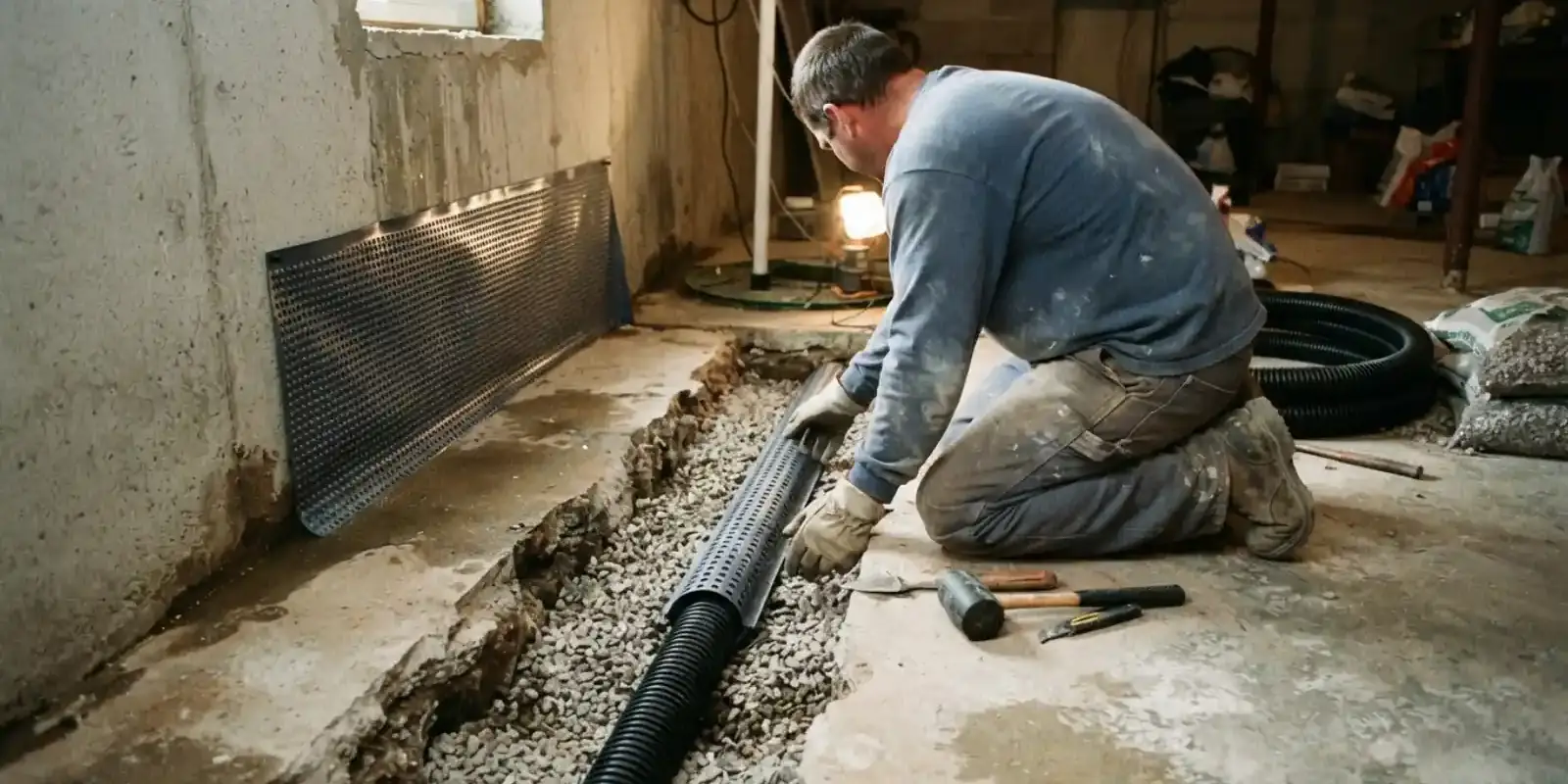
Interior drain and sump
- Drain pipe set in a trench cut along the inside of the footing, running to a sump pit
- Works inside, so no digging up landscaping, decks or walkways
- Collects water that reaches the floor and pumps it out, rather than keeping it from touching the wall
- Needs a working pump, so a backup pump and power plan matter
- Usually done by a plumber together with a concrete crew
Exterior excavation and membrane
- Soil is dug away to the footing, the wall is sealed, and drain tile is replaced
- Stops water at the outside face of the wall
- Costly and disruptive, with damage to plantings, patios and driveways
- Needs Indiana 811 notice at least two full working days before digging
- Excavation and masonry are outside what we do
What a plumber does and does not do
We install and replace sump pumps, set up battery backups, run discharge lines, connect interior drain systems to a pit, and clear or replace floor drains. If water is coming from a broken supply line or a failed drain, we find that with pressure testing and a sewer camera. See our page on sump pump service for how pits and pumps are sized.
We do not pour concrete, regrade yards, rebuild foundation walls, or dig exterior trenches. If your wall is bowing or a crack is wider than a pencil, call a structural engineer first. Anyone who promises a wet basement will be 100 percent dry forever deserves a second opinion.
Check the outside before you spend money inside
Many wet basements improve with low-cost changes around the house.
Extend downspouts
Point each one at least six feet from the foundation. A downspout that dumps at the wall puts hundreds of gallons beside it in one storm.
Check the slope
Soil should fall away from the house. A low spot against the wall holds water against the foundation.
Clean gutters
A clogged gutter overflows right at the wall, usually at the corner.
Look at window wells
Debris and missing covers let rain fill the well. A well with no drain below it can leak through the window.
Watch where the sump discharges
The line should end well away from the house on the yard side, not back at the foundation.
Crack sealing and what it can do
Injecting a crack from the inside with epoxy or polyurethane can stop a leak through a single vertical crack in a poured wall. Epoxy bonds and is stiff, while polyurethane stays flexible if the crack moves a little. It is a patch for one path, not a system.
Painted-on waterproof coatings are different. They slow vapor, but they do not hold back water pushing through the wall, and they tend to peel. If a product promises to waterproof a wall that has real seepage with a single coat, be skeptical.
Keep clear water out of the sewer
Never tie a sump pump or footing drain into the sanitary sewer. Clear-water flow overloads sewer capacity and can back sewage into houses during heavy rain. Discharge belongs on the storm or yard side.
The Town of Zionsville's stormwater ordinance lists water from crawl space pumps and footing drains among the flows it exempts. That is not a full sump discharge rule, so ask the Town where your pump may discharge. Permit questions go to the Zionsville Planning & Building Department.
What affects the price of basement waterproofing
No honest company can name a number without seeing the house. These are the things that move it.
Cause of the water
A clogged downspout is a very different job from a high water table under the slab.
Length of drain and size of the pit
More linear feet of trench, more concrete work, and a bigger pit all add labor.
Pump capacity and backup
A primary pump alone costs less than a pump with a battery or water-powered backup.
Finished basement
Walls, flooring and trim over the work area must be opened or protected.
Discharge route
A long run to a safe outlet takes more pipe and trenching.
Policies commonly cover a sudden, accidental discharge inside the house and commonly exclude groundwater seepage, slow leaks and worn-out parts. Read yours, and ask your agent whether sump pump failure or sewer backup is covered or needs an add-on.
Call us and we will talk through your basement and give a clear price before work starts.
Call (317) 740-1302Hiring the right people in Indiana
Indiana law says plumbing for hire takes a license from the Indiana PLA. Check anyone you are considering, including us, on the state's online license verification. Ask for the plumber's name as licensed and look it up before work starts.
If your water is coming from a leaking line rather than the ground, our leak detection work uses pressure tests and listening gear to find it. We also work in Whitestown and nearby towns, which the Whitestown service area page covers.
Frequently asked questions
Partly. We handle the plumbing parts, which are sump pits and pumps, discharge lines, interior drain connections and floor drains. Exterior excavation, wall sealing and foundation repair are masonry or foundation work, and we will say so.
Interior drains control water that reaches the floor and cost less than digging. Exterior work stops water at the wall but is disruptive and expensive. The right answer depends on where the water enters and on the condition of the walls.
Rain saturates the soil, and clay-heavy ground drains slowly, so groundwater pressure builds against the wall and floor joint. Gutters and downspouts that dump water near the house make it worse. Check those first.
Permit rules vary, so ask the Zionsville Planning & Building Department before work starts. They review building permits for the Town.
Clear water goes to the yard or storm side, never into the sanitary sewer. The Town's stormwater ordinance lists water from crawl space pumps and footing drains among exempt flows, but that is not a full rule. Ask the Town where your pump may discharge.
Yes, for digging. Indiana 811 must receive the notice at least two full working days before the dig and no more than ten calendar days before. We do not do exterior excavation, but any contractor you hire for it should file the ticket.
Use the state's online license verification, run by the Indiana Professional Licensing Agency. Search by name, and confirm the license is active before work starts.
Sources
Figures and guidelines on this page are taken from these public sources. Local rules and utility details can change, so check the source before you rely on a number.
- Indianapolis normal annual precipitation 43.63 in (Federal agency)
- Crosby series description, hedged (Federal agency)
- 811 notice timing (Local government)