
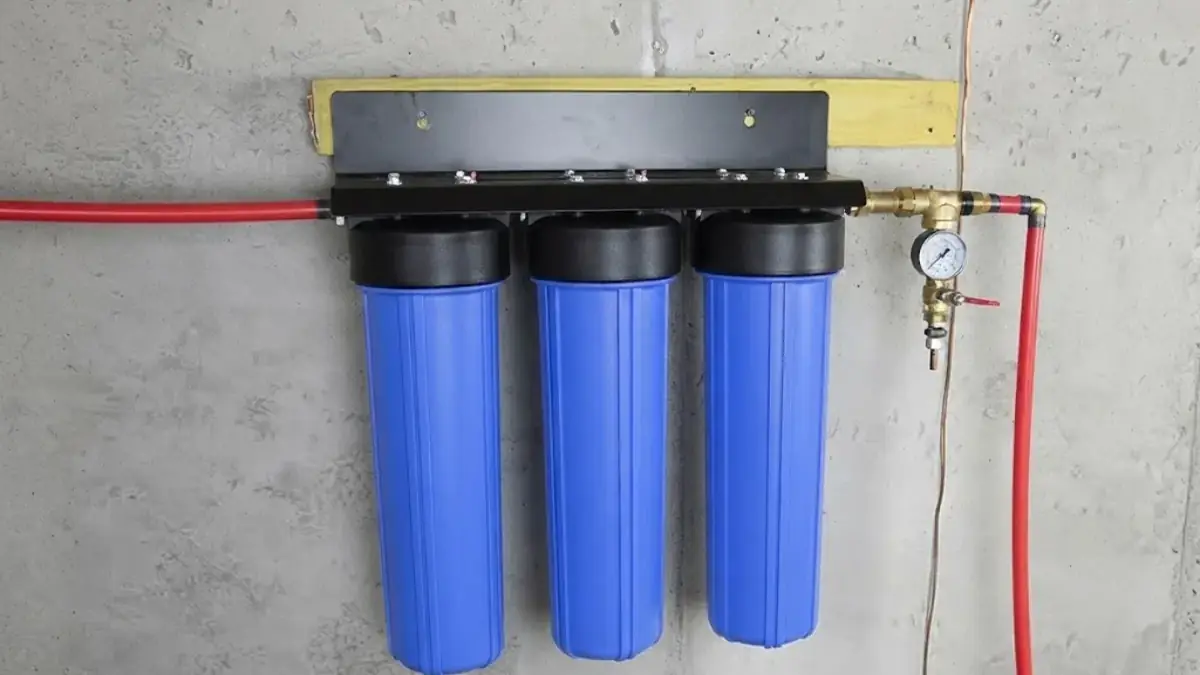
Decide what you want to remove
Filters do different jobs, and no single one does all of them. Activated carbon improves taste and smell and reduces chlorine. A sediment filter catches sand and rust flakes. Reverse osmosis (RO) pushes water through a fine membrane and removes many dissolved solids. None of these is a water softener, and none removes much of the calcium and magnesium that make water hard.
So the first question is the complaint. Bad taste points to carbon. Brown specks point to sediment. White scale on fixtures points to hardness, which a softener handles. See our page on water softener service for that case.
Filter types compared
This is a general guide to how the common options differ. Look for the certification on the box, not just the claims.
| Type | Good for | Install |
|---|---|---|
| Pitcher or faucet-mount | Taste, chlorine, some metals if certified | No tools |
| Under-sink carbon | Taste, odor, chlorine, some contaminants if certified | Homeowner with basic tools |
| Under-sink reverse osmosis | Dissolved solids, many metals, with a separate tap | Homeowner with patience, drilling a sink hole |
| Whole-house sediment and carbon | Rust, sand, chlorine at every tap | Licensed plumber |
| Water softener | Scale from hard water | Licensed plumber |
Look for NSF/ANSI certification. Standard 42 covers aesthetic effects like taste and chlorine, Standard 53 covers health effects such as lead, and Standard 58 covers reverse osmosis systems. A filter that lists a contaminant on the package without a matching standard is only making a claim.
Test the water before you buy
Every community water system must publish an annual water quality report, often called a consumer confidence report. It lists what was found in the water and the utility's hardness. Your water bill names your utility, and the report is usually on its website. This is free and tells you what a filter needs to do.
If you are on private well water, the report does not exist and you need a lab test instead. Do that before you buy anything, because bacteria and nitrates are not fixed by a pitcher.
Want a licensed plumber to look at it?
Call the 24/7 line and describe what you are seeing.
Water supply in Zionsville and what it means for filters
We cannot give you a hardness number for Zionsville, because the Town's own pages do not state one. The Town's utilities page lists Citizens Water contact numbers, and Citizens' Indianapolis-area report describes its water as hard, at about 200 to 425 parts per million. That report does not mention Zionsville, so treat it as a hint and check your own bill and utility report.
The Town of Zionsville provides sewer service, which is billed separately as a flat monthly rate per residence. If you are on a private well in the area, the Boone County Health Department requires a permit to drill or repair a well and requires bacteria testing of new wells before use. Call the department at 765-483-4458 before drilling, and test before you filter.
Installing an under-sink filter
Plan on about an hour for a careful first install. Read the manual for your model first.
Shut off the cold supply
Close the stop valve under the sink, then open the faucet to relieve pressure. Put a towel and a bucket below.
Mount the filter housing
Fix the bracket to the cabinet wall with screws, leaving room below the housing to unscrew the cartridge.
Tee into the cold line
Use the supplied adapter and compression fittings. Hand tighten, then add a quarter turn with a wrench. Over-tightening cracks the fitting.
Flush and check
Open the valve slowly and flush the cartridge as directed, usually a few minutes. Check every joint with dry paper towel after an hour and again the next morning.
DIY or call a plumber
The line is drawn by where the water enters your home, not by how handy you are.
Reasonable to DIY
- Pitcher, faucet-mount and countertop units
- Under-sink carbon and reverse osmosis kits
- Changing cartridges on a schedule
- Replacing a refrigerator line filter
Call a licensed plumber
- Any whole-house filter or softener on the main line
- Cutting or soldering copper, or changing PEX connections at the main
- Adding a bypass valve and a pressure check
- Drain lines for backwash or RO waste
Why the whole house is a plumber's job
A whole-house unit goes on the main supply, after the shutoff and before the water heater and branch lines. That means cutting the pipe, setting unions and a bypass, and restoring pressure to every fixture. A bad joint there floods a basement, and a missing bypass leaves the house without water when a cartridge clogs.
In Indiana the Indiana Professional Licensing Agency (PLA) licenses plumbing contractors and journeyman plumbers, and says it is unlawful to act in either capacity without a license. You can check any plumber on the state's online license verification. Our crews are licensed and insured, and we give a clear price before work starts. See our notes on plumbing installation.
What a home filter cannot do safely
A filter is not a disinfectant. If your utility issues a boil water notice, a pitcher or under-sink cartridge does not make the water safe, so follow the notice. The same goes for well water that tests positive for bacteria, which needs treatment designed for it and a retest.
Lead needs special care. Only a filter certified to NSF/ANSI Standard 53 for lead should be trusted for it, and the cartridge must be changed on time. If you suspect old lead or galvanized service pipes, ask your utility and a licensed plumber, and do not rely on a taste test.
Maintenance people forget
A filter that is never changed becomes a bacteria trap.
- Change cartridges on schedule Most carbon cartridges last a set number of months or gallons. Write the date on the housing with a marker.
- Sanitize at each change Follow the maker's steps. Wash your hands and the housing before reassembly.
- Replace the RO membrane on time The membrane has a longer life than the pre-filters, but it is not forever.
- Keep a spare O-ring A dry or pinched O-ring is the usual cause of a leak at the housing.
If the water looks wrong
Brown water that runs clear after a minute, a sulfur smell or a sudden metallic taste are signs to test, not signs to buy a bigger filter. If a pipe is leaking after a filter install, shut off the main and call. Our 24/7 emergency line takes urgent water problems at any hour, and we serve Zionsville and nearby towns, including Whitestown.
For a full list of towns, see areas we serve. A leak at a filter fitting can also be traced with leak detection if water shows up where you do not expect it.
Frequently asked questions
No. Carbon, sediment and reverse osmosis filters do not remove enough calcium and magnesium to soften water. Scale on fixtures and spotted glasses need a water softener, and a softener is installed on the main line by a plumber.
Look for NSF/ANSI marks that match your goal. Standard 42 covers taste and chlorine, 53 covers health contaminants such as lead, and 58 covers reverse osmosis. Ask for the certificate for the exact model.
Many homeowners can, with a wrench and care. Shut off the supply, tee into the cold line, flush the cartridge and check for leaks for a day. If the supply valve is stuck or the pipe is old and corroded, stop and call.
Call the Boone County Health Department. It requires a permit to drill or repair a private well, requires registered well drillers, and requires bacteria testing of new wells before use. Test first, then choose a filter based on the results.
We cannot state a Zionsville figure from a source we trust. Ask your utility for its annual water quality report, which lists hardness, or test your own tap with a hardness strip.
Sources
Figures and guidelines on this page are taken from these public sources. Local rules and utility details can change, so check the source before you rely on a number.
- Town utilities page lists Citizens Water contact numbers, sewer billed as flat monthly rate (Local government)
- Citizens' Indianapolis-area water described as hard, about 200 to 425 ppm, does not mention Zionsville (Utility)
- Boone County Health Department private well permit and bacteria testing rules (Local government)
- Indiana PLA plumbing licensing and license verification (Agency)