
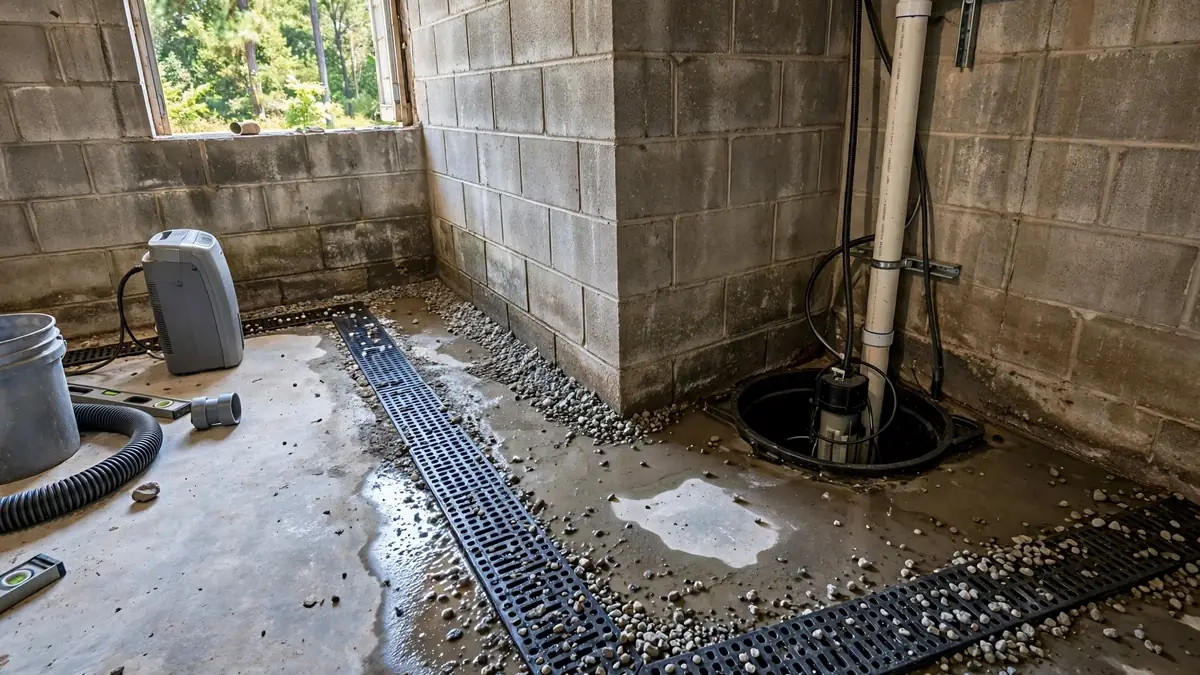
Find the source before you buy anything
Cut a square of clear plastic about a foot across and tape every edge to a dry patch of wall. Leave it a couple of days. Beads on the wall side mean water is crossing the concrete. Beads on the room side are condensation from humid air, and a dehumidifier is the answer, not paint.
The EPA suggests keeping indoor relative humidity below 60 percent, and ideally between 30 and 50 percent, and a hardware store humidity meter costs very little. Many basements called wet are only humid, and treating them as leaky wastes a weekend.
What a homeowner can do, and what to hand off
Work from the cheapest, outside-in fixes toward the costly, inside jobs. Most basements improve at the first two steps.
| Job | DIY? | Where it stops |
|---|---|---|
| Clean gutters and extend downspouts | Yes | Downspout ends should discharge several feet from the wall |
| Regrade soil so it slopes away | Yes, with a shovel and fill dirt | Large regrading or drainage swales may need a contractor |
| Seal small cracks with hydraulic cement or epoxy | Yes, for hairline cracks | Horizontal cracks or steps in block walls need a structural engineer |
| Masonry waterproofing paint | Limited | Fails if water pushes from behind the wall |
| Replace a sump pump | Often yes | New pits, drain tile and discharge lines are plumbing work |
| Interior drain system or exterior excavation | No | Licensed plumber, excavator or waterproofing contractor |
Gutters, downspouts and grade come first
The EPA tells homeowners to clean and repair roof gutters regularly and to make sure the ground slopes away from the foundation. This is the most effective DIY step for the least money. A gutter full of leaves spills at the corner and soaks the soil next to the footing.
Pull downspout extensions out so water lands several feet from the wall, and rake soil so it falls away from the house. Check after the next hard rain. If water still pools at the foundation, go to the next step.
Want a licensed plumber to look at it?
Call the 24/7 line and describe what you are seeing.
Signs the problem is bigger than a weekend job
Walk the basement the morning after a storm and look for these.
Water at the floor-wall joint
A damp line around the edge of the slab means pressure from groundwater, which paint cannot hold back.
A sump pit that fills fast
A pump that cycles all day with no rain points to a high water table or a leaking pipe close by.
Horizontal cracks
A crack across the middle of a block wall can mean soil pressure bending it inward. Do not seal it, have it looked at.
Water from a floor drain
Water rising through a floor drain is a backup from the drain line, and no wall sealer touches that.
Why DIY coatings often disappoint
Masonry waterproofing paint forms a film on the inside face of the wall. When groundwater pushes from the outside, it lifts or blisters that film. Paint can help with damp walls and light seepage, but it does nothing about the pressure behind it.
Crack sealing has the same limit. Hydraulic cement sets fast and plugs a hairline crack well, yet a crack that keeps moving will reopen. Treat sealing as a patch, and keep an eye on any crack wider than a pencil line. A moving crack is a structural question, not a plumbing one.
Pump it out or stop it outside
If water keeps coming in, there are two routes, and both take more than a weekend.
Interior drain and sump pit
- Collects water at the footing and sends it out
- Done from inside, with the least digging
- The plumbing side is our work, see sump pump service
- Needs power, so a battery backup is worth asking about
Exterior waterproofing
- Digs down to the footing and seals the wall
- Stops water before it reaches the wall
- Heavy excavation, landscaping repair and long timelines
- Excavation and wall repair are masonry trades, not plumbing
Before you dig, call 811
Digging a drain run, a downspout trench or a deep regrade falls under Indiana's excavation notice rules. Since January 1, 2025, Indiana 811 must receive your notice at least two full working days ahead and no more than ten calendar days ahead. You may start at 7 a.m. on the next working day after those two days end.
A working day runs 7 a.m. to 6 p.m. Indianapolis time and skips weekends and legal holidays. Each ticket expires 20 days after submission. Indiana 811 forwards your request to the utility operators, who respond. Hitting a gas, electric or water line while digging a trench is how a weekend job turns into an emergency, so do not skip the call.
What this means in Zionsville
The Town of Zionsville's Stormwater Management Ordinance prohibits discharges other than stormwater into the storm drain system. It lists water from crawl space pumps, footing drains and uncontaminated pumped groundwater among the flows it exempts. Those exemptions are not a complete rule for sump discharge. Ask the Zionsville Planning & Building Department where your pump may drain, and keep it off the sanitary sewer.
The National Weather Service gives Indianapolis a normal annual precipitation of 43.63 inches. A foundation sees that rain every year, so drainage pays off. Permit rules for foundation or drain work vary, so ask the Planning & Building Department at 1100 W Oak Street before you start anything beyond gutters and grading.
A sensible order for the work
Spend the least first and re-check after each step.
- Test the wall Test the wall with plastic to learn whether it is condensation or seepage.
- Fix the outside Clean gutters, extend downspouts and fix the grade, then watch the next storm.
- Patch the cracks Patch hairline cracks with hydraulic cement and recheck in a few weeks.
- Escalate If water persists, call for help with a sump pit or drain system, and ask a plumber what part is plumbing and what is not.
Who to call for what
We are licensed plumbers, and the plumbing side of a wet basement is ours. That covers a sump pump, pit, discharge line and floor drain, plus the basement waterproofing questions that sit around them. We do not do foundation excavation or structural repair and will say so plainly.
In Indiana, plumbing contractor and journeyman work requires a license from the Indiana Professional Licensing Agency. You can check any plumber through the state's license lookup. We also serve Whitestown and nearby towns, listed under areas we serve.
Frequently asked questions
Only for damp walls and light seepage. When groundwater pushes through the wall, paint on the inside lifts and blisters. Fix the water source outside first.
Swapping an existing pump is often a homeowner job. Adding a new pit, drain tile or discharge line is plumbing work that should go to a licensed plumber, and the discharge location needs to be right.
Yes if you dig. Indiana 811 needs notice at least two full working days before you dig and no more than ten calendar days before, under rules effective January 1, 2025.
The Town's stormwater ordinance lists water from crawl space pumps and footing drains among the flows it exempts from its ban on non-stormwater discharges. That is not a complete sump rule, so ask the Town before you route a discharge pipe. Clear water from a sump never belongs in the sanitary sewer.
Tape clear plastic to the wall for a couple of days. Beads on the wall side mean seepage, and beads on the room side mean humid air. The EPA suggests humidity below 60 percent, ideally 30 to 50 percent.
Sources
Figures and guidelines on this page are taken from these public sources. Local rules and utility details can change, so check the source before you rely on a number.
- EPA humidity 30 to 50 percent, gutters and grade advice (Federal agency)
- Indiana 811 notice timing, working day, ticket expiry (Agency)
- Indianapolis normal annual precipitation 43.63 in (Agency)
- Town of Zionsville Stormwater Management Ordinance exemptions and Planning & Building Department (Local government)
- Indiana PLA plumbing licensing (Agency)