Signs your pipes are failing
One leak is a repair. A pattern of leaks, or a change in the water itself, is the kind of evidence that points toward replacement.
Repeated pinhole leaks
A second or third leak within a year or two, in different spots on the same material, usually means the pipe is wearing out everywhere, not at one fitting.
Brown or rust-tinted water
Water that runs orange or brown from the tap after sitting overnight can come from corroding steel pipe. It clears as you run it, then comes back.
Weak flow at every fixture
Galvanized steel builds scale inside until a three-quarter-inch pipe passes water like a much smaller one. Showers go weak first, especially when a second tap opens.
Green or blue crusting
Greenish buildup on copper joints and valves is corrosion. A small patch is cosmetic, but wet crust around a joint is a slow leak.
Pipes that rattle or clank
Loose straps and water hammer are fixable. Noise together with leaks and discolored water is a different conversation.
A bill that creeps up
Hidden leaks inside walls waste water long before stains show. Check the meter with everything off, as the EPA suggests, to see if it moves.
Why pipes in a house wear out
Galvanized steel is zinc-coated iron. The coating wears away over decades and the iron underneath rusts from the inside, so the pipe narrows even when the outside looks fine. Copper can develop pinhole leaks where water chemistry, flow speed or poor soldering has thinned the wall. Plastic supply pipes have their own limits, including age and fittings that were never well suited to the pipe.
Water quality plays a part, and it is not something we can give you from a table. Ask your water utility for its annual water quality report, and check your bill to see which utility that is. If you have pinhole leaks in copper, tell us when you call so we can look at the pattern.
Copper, PEX and CPVC compared
There is no single best pipe. The right one depends on your walls, your access and what you want to avoid.
| Material | How it behaves | Watch for | Best fit |
|---|---|---|---|
| Copper | Rigid metal, joined by soldering or press fittings. Long track record in homes. | Pinholes in aggressive water, higher material cost, more labor to install. | Exposed runs, mechanical rooms and homeowners who want metal. |
| PEX | Flexible plastic tubing that bends around corners and needs fewer fittings. | Damaged by sunlight, so it must stay covered. Cannot be used where it will be exposed to UV. | Walls with limited access and whole-house replacement with fewer holes. |
| CPVC | Rigid plastic, solvent-cemented joints. Handles hot and cold water. | Becomes brittle with age and heat. Needs careful support and joint work. | Straight runs with good access, such as basements and open framing. |
| Galvanized steel | What many older homes still have. Not installed in new work. | Scale and rust inside the pipe, restricted flow, leaks at threaded joints. | Nothing new. It is what we replace. |
We will recommend a material after we see the house, and we will tell you if the choice is close. Ask the Zionsville Planning & Building Department which materials and methods it accepts before you commit, because the answer can affect the permit.
Planning repiping work?
Call for a clear price before work starts, and ask about same-day appointments when available.
Partial repipe or whole house
You do not always need to replace everything. The choice turns on how much of the system is the same worn material.
Partial repipe makes sense when
- One bathroom, kitchen or a single branch has failed
- The rest of the pipe tests sound and flows well
- A section was damaged by a freeze or a remodel
- You plan to renovate the other areas later
Whole-house repipe makes sense when
- Leaks keep appearing in different places
- The same galvanized or failing pipe runs through the whole house
- Flow is poor at every fixture
- You are opening walls anyway for a major remodel
How we decide what needs replacing
We start by looking, not selling. We trace the supply from the main shutoff through the basement or crawl space, note every material and fitting we can see, and check pressure and flow at several fixtures. Where we find leaks, we look at the pipe around them, not just the drip.
A pressure test on isolated branches shows whether a section holds. Where access is limited, a small camera or a thermal scan can show a hot water line leaking inside a wall. The result is a written plan for what to replace, in what order, and what can stay.
Drywall, access and what repiping really involves
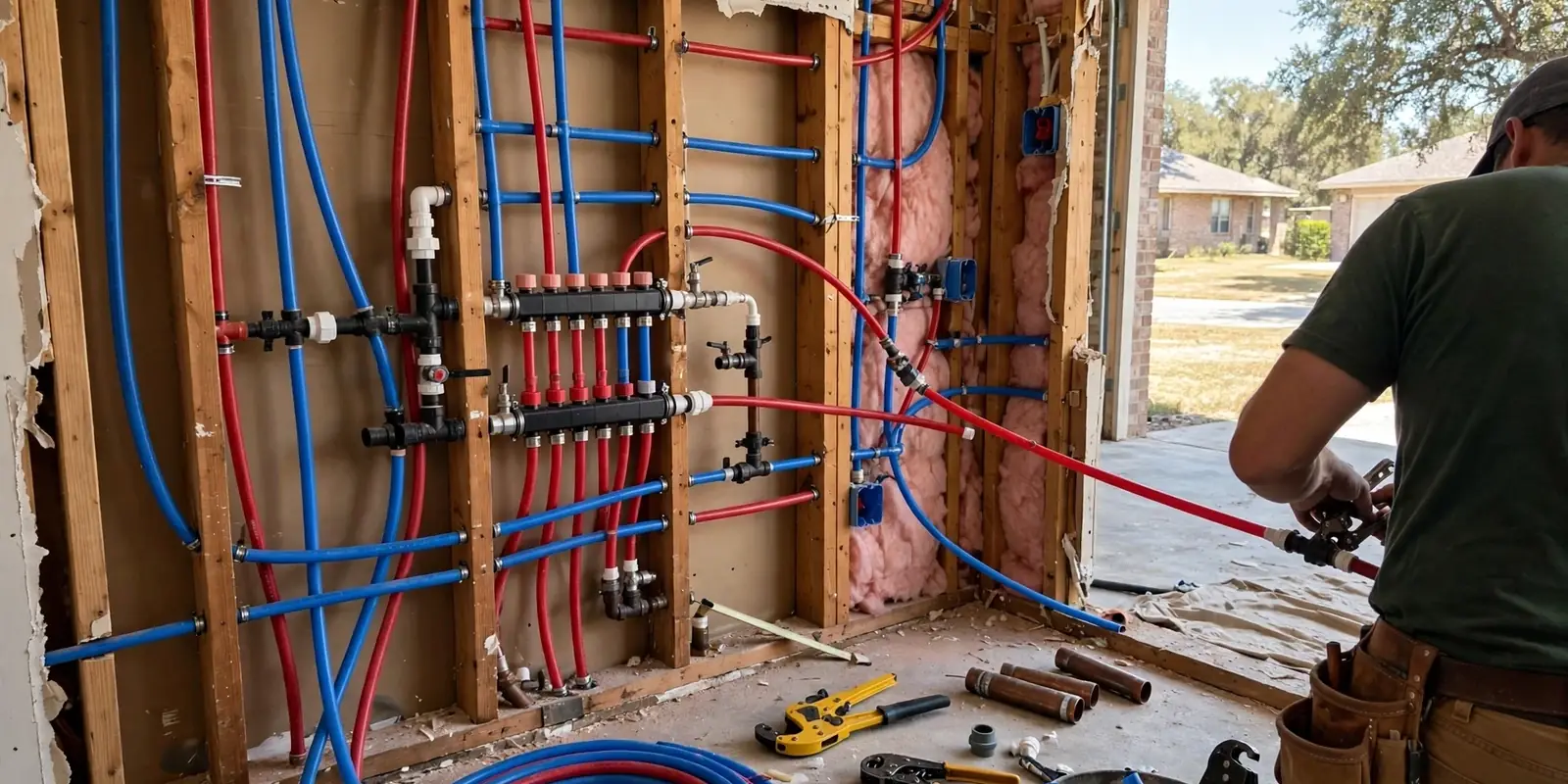
Repiping usually means opening some drywall. How much depends on the house. Homes with open basements or crawl spaces let us run most new pipe below the floor and reach each fixture from underneath, so wall openings stay small and local.
In a finished two-story house, new vertical runs may need access holes at floor and ceiling lines. We cut them clean and neat so a drywall finisher can patch them. We do not promise zero holes, and we do not do the painting, so plan for a drywall and paint trade after us.
The water is off for part of each day while we work. We tell you in advance which days the main will be closed, so you can plan around showers, laundry and cooking.
Galvanized pipe replacement in older homes
Galvanized steel is the clearest case for replacement. Its failure mode is internal, so the pipe can look fine on the outside and still pass only a trickle. Steel nipples and threaded joints also tend to seize and crack when disturbed, which is why plumbers avoid tapping into old galvanized with a quick fix.
When we replace it, we also replace the valves and connections that join it, because mixing new copper directly onto steel invites corrosion at the joint without the right fittings. If you have a mix of old materials, we map the full system first so the new work ties in cleanly.
Before you schedule a repipe
A little preparation saves time and money on the day.
Find your main shutoff
Know where the line enters the house, often in a basement or crawl space, and confirm it closes fully.
List every leak and symptom
Note where leaks happened, when, and what repair was made. Patterns matter.
Check your insurance
Ask your agent whether any past water damage claim affects coverage, and keep records of earlier repairs.
Ask about permits
Contact the Zionsville Planning & Building Department at 1100 W Oak Street to learn what a repipe requires.
Plan for the water-off days
Arrange drinking water, laundry and showers elsewhere on the days we shut the main.
What affects the price of repiping
Repiping is priced per house, not per foot, because no two houses are alike. We do not quote over the phone without seeing the pipe.
Pipe material
Copper, PEX and CPVC differ in material cost and in how long they take to install. We show you the options for your layout.
Size and layout of the house
More bathrooms, floors and fixtures mean more pipe and more connections. A compact ranch is a different job from a three-story house.
Access
An open basement saves labor. Finished ceilings and tight walls take longer, and that shows up in the price.
Permits and inspection
Some work needs a permit and inspection. The Planning & Building Department can say what applies to your project.
Repairs after the work
Drywall patching and painting are separate trades. We tell you what is included in our price and what is not.
Home policies generally respond to a pipe that bursts suddenly. They generally do not pay to replace pipe that has simply worn out or leaked slowly. Read your policy and ask your agent before you assume a repipe is covered.
Call us and we will arrange a visit, look at your actual pipes and give you a clear price before work starts.
Call (317) 740-1302Repiping for Zionsville homes and the towns around us
The Census Bureau lists Zionsville's owner-occupied rate at 84.2 percent. Owners who plan to stay are the ones who gain most from a repipe, because the cost is spread across many years of dependable water. Neighbours in Whitestown can read about our Whitestown service area.
A repipe is a big job, so look up whoever bids on the state's online license verification. Indiana requires a license to work as a plumbing contractor or journeyman, and we are licensed and insured. If a section has already burst, our burst pipe repair page covers the immediate steps, and a single failed line may be better handled by water line repair.
Frequently asked questions
A single leak at a fitting is a repair. Repeated leaks in different places, rust-colored water and weak pressure across the whole house point to pipe that is wearing out.
We look at the full system before recommending anything and will tell you when a repair is the sensible choice.
Neither wins in every house. PEX needs fewer wall openings and fittings, while copper is rigid metal with a long record. The right one depends on access, budget and what you want to avoid.
We explain the trade-offs for your layout instead of pushing one product.
It depends on the size of the house and how easy the pipes are to reach. We set a schedule after we see the layout, including which days the water will be off.
We will not give a time on the phone without seeing the house.
Some openings are normal. Open basements and crawl spaces let us do most of the work below the floor, which keeps wall cuts small. Finished two-story homes need more access holes.
We cut clean and tell you where the holes will be. Drywall finishing and paint are done by other trades.
Permit rules vary, so ask the Zionsville Planning & Building Department at 1100 W Oak Street before work begins. They review building permits for the Town.
We will tell you what the plan includes so you can ask the right question.
Yes. If part of the house was already updated and the rest is galvanized, we can replace the steel and tie into the newer pipe with the right fittings.
We check the joints between old and new, because mixing metals carelessly causes corrosion.
Usually not for worn pipe. A standard homeowner policy usually covers sudden and accidental water damage but not wear or gradual leaks.
Check your policy and ask your agent, especially if you have had a claim.
The Indiana Professional Licensing Agency runs a free lookup, called the state's online license verification.
Enter the name of the contractor and the person doing the work, and do it before a deposit changes hands.