
Is it time to replace, or can it be repaired?
Age is the first clue. DOE lists 10 to 15 years for storage tanks, about 20 for tankless and 10 to 15 for heat pump models. A tank past 12 years that starts leaking from the body is finished, because the steel shell has failed and no part can fix it.
A tank that is only a few years old and has a bad thermostat, heating element or gas control valve is usually a repair. Our water heater repair page covers those cases. As a rule, the older the tank and the bigger the repair, the less sense it makes to pay for the repair.
Repair, like-for-like swap or upgrade
Most homeowners land in one of three places. This table shows what each path usually means for the quote.
| Path | When it fits | What the quote has to cover |
|---|---|---|
| Repair | Tank is young, leak is from a fitting or a part | Part, labor, draining and refilling |
| Like-for-like tank swap | Tank is near its 10 to 15 year range and the space and fuel stay the same | New tank, flex or copper connectors, valves, haul-away of the old unit |
| Upgrade or change of type | You want tankless, a bigger tank, or a heat pump unit | New venting or gas line sizing, electrical work, drain and condensate routing, possible wall or shelf changes |
The like-for-like swap is the simplest job and the easiest quote to compare. An upgrade can be a better long-term choice, but it is a different project and should be quoted as one.
What goes into the price
The unit itself is the most visible line, and it varies by fuel, capacity, efficiency rating and brand tier. A 50-gallon gas tank with a power vent costs more to buy and to vent than a basic 40-gallon electric tank, and a tankless unit costs more again.
Labor and access come next. A heater in an open basement utility area is quick to swap. One in a tight closet, an attic or a finished space takes longer, and long vent runs or a tricky gas line add hours.
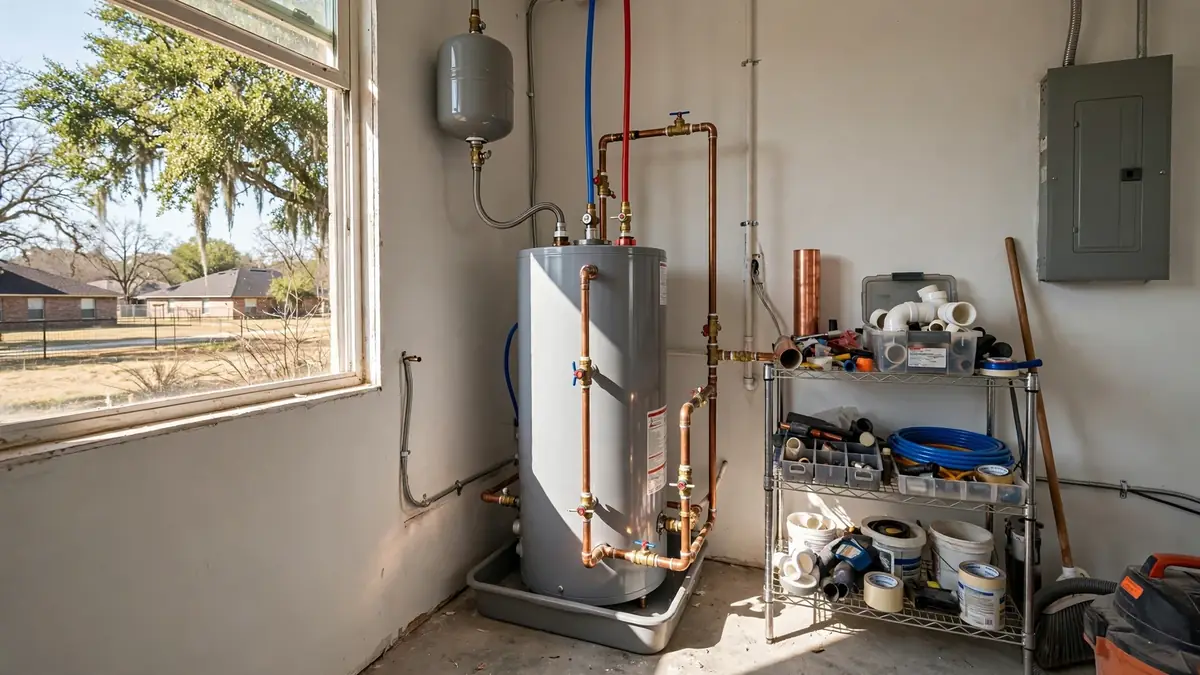
Code-related parts matter too. A closed system usually needs a thermal expansion tank, because water expands when heated and has nowhere to go. A tank also needs a temperature and pressure relief valve and a discharge pipe routed to a safe spot. These are safety items, so a quote that leaves them out is not really cheaper.
Want a licensed plumber to look at it?
Call the 24/7 line and describe what you are seeing.
How to read a replacement quote
Ask for the quote in writing and check that it answers each of these. If a line is missing, ask about it before you compare totals.
Exact unit
The brand, model, fuel type, tank size and first-hour rating or tankless flow rating should be named, not just "50-gallon heater."
Parts included
Look for new water connectors, a shutoff valve, the relief valve and discharge pipe, and the expansion tank if your system needs one.
Venting and gas or electric work
For gas units, ask whether the vent and gas line are reused or replaced. For electric units, ask whether the wiring and breaker are adequate.
Old unit removal
Draining, disconnecting and hauling off the old heater should be a named line, not an assumption.
Permit and warranty terms
Ask who pulls any needed permit and how the manufacturer and labor warranties work. Get the answer in writing.
Tank size and running cost
Buying a bigger tank than you need raises both the purchase price and the standby heat loss, because the tank keeps its whole volume hot all day. Buying one that is too small means cold showers when two people use hot water back to back.
Size by how many people live in the house and when they use hot water at once, not by the size of the tank you have now. A household that has changed since the last install may need a different size. Ask your plumber to talk through the morning routine in your house before picking a model.
Efficiency is the other half. A higher efficiency unit usually costs more up front and less to run, so the question is how long you plan to stay in the home. The energy guide label on the unit shows the estimated yearly operating cost, and that is a better comparison than the sticker price alone.
Nearby towns and where we work
We work across town and over in nearby Whitestown too, and the areas we cover page lists the rest.
Tank or tankless when you replace
DOE lifespan figures give tankless a longer expected life, but the install is a bigger job in most older homes.
Storage tank
- Lower purchase price and simpler swap
- DOE lists 10 to 15 years of life
- Keeps hot water on standby, so it can run out
- Needs a drain and sediment flush over time
Tankless
- DOE lists about 20 years of life
- Heats water only when you open a tap
- Gas models often need new venting and a larger gas line
- Higher install cost, covered in our tankless page
Hard water and the life of the new heater
Mineral sediment collects on the bottom of a tank and coats heating elements and heat exchangers. It makes the unit work harder, adds noise, and shortens its life. Draining a few gallons from the drain valve once a year helps a tank, and an anode rod check catches corrosion early.
If your water is hard, a water softener or a scheduled flush can protect the new heater. Your bill points to your water utility, and its yearly quality report lists hardness. Read that number before you pick the unit, and ask about a water softener if the number is high.
When to call a plumber and when to wait
Call right away if you see water pooling around the tank, smell gas, or find a scorched or melted fitting. With a gas smell, walk outside first and phone the gas utility or 911 from there. For a leak, switch off the power or gas control to the heater and close the cold water valve above it.
Do not try to swap a gas heater or rework a vent yourself. Gas connections and flue gases are a safety job. A handy homeowner can flush a tank or test the relief valve, but a replacement belongs with a licensed plumber. We handle water heater replacement and water heater installation with a clear price before work starts.
What this means in Zionsville
The Census Bureau puts Zionsville's owner-occupied rate at 84.2 percent for 2020 to 2024, so most of the people reading this own the heater and the decision. That makes the long view worth taking. If you plan to stay, compare the yearly operating cost on the energy guide label, not only the first number on the quote.
Before a gas, vent or electrical change, phone the Town's Planning & Building office on W Oak Street, which reviews building permits and keeps weekday hours of 8 a.m. to 4 p.m. Rules differ by job, so let them tell you what applies. Also keep the written quote and the new unit's paperwork together, because the manufacturer warranty usually starts from the install date.
Citizens Energy Group calls its Indianapolis-area water hard, and the Town's utilities page carries Citizens Water phone numbers. Citizens' report never mentions Zionsville, so use your own bill and utility report to settle hardness before choosing a softener or flush schedule.
Frequently asked questions
The US Department of Energy lists 10 to 15 years for storage tank heaters, about 20 years for tankless, and 10 to 15 years for heat pump models. Hard water, a skipped flush or a missing expansion tank can shorten that range.
They often cover different work. One may include a new expansion tank, a vent upgrade and haul-away, while the other lists only the tank and labor. Compare line by line, not by total.
The Town's Planning & Building Department decides, so ask them. Gas, vent and electrical changes are the usual reasons a permit comes up, and we can describe the planned work so your question is specific.
The IRS says the federal energy efficient home improvement credit covered heat pump water heaters only for property placed in service before the end of 2025, so it expired for 2026. Check the IRS page and ask your tax adviser about any newer program.
Swapping an electric tank is possible for a skilled DIYer, but a gas unit involves a gas connection and venting that should be done by a licensed plumber. Mistakes there are a safety risk.
Indiana licenses plumbing contractors and journeymen through the Professional Licensing Agency, and the state runs a free online license check. Search the name on your quote before anyone starts work.
Sources
Figures and guidelines on this page are taken from these public sources. Local rules and utility details can change, so check the source before you rely on a number.
- DOE lifespans for storage tank, tankless and heat pump water heaters (Federal agency)
- Zionsville owner-occupied rate 84.2 percent, 2020-2024 (Local government)
- Town utilities page lists Citizens Water contact numbers (Local government)
- Citizens Indianapolis-area water described as hard, report does not name Zionsville (Utility)
- Zionsville Planning & Building, 1100 W Oak St, permit review, hours Mon-Fri 8-4 (Local government)
- Federal 25C credit for heat pump water heaters ended after 2025 (Federal agency)
- State online license verification (Agency)